The Precision-Engineered Meta Ads Google Ads Together Strategy: How to Scale Without Cannibalising Your Budget
7 April 2026 • By Jakub Cambor, Founder of AI for Marketing | Top 1% Upwork Expert Vetted Talent
Last updated: 7 April 2026
Introduction: The Multichannel Marketing Paradox
Founders and marketing directors frequently reach a frustrating breaking point when scaling digital campaigns. You increase your ad spend across multiple platforms, yet your overall business revenue begins to plateau. You open your advertising dashboards and see a contradictory narrative: both platforms claim record-breaking returns, yet your actual bank deposits in Stripe or Shopify tell a much different story. Your acquisition costs drift upward, your reporting becomes a political debate, and every budget conversation turns into an argument about which platform actually deserves the credit.
This disconnect is the primary symptom of a fragmented marketing ecosystem. Treating major advertising networks as isolated silos is a costly error. When platforms are allowed to operate independently, they inevitably compete for the same attribution credit. This leads to wasted spend and muddy analytics. The platforms are not designed to collaborate by default. They are designed to win attribution and keep your budget within their specific walled gardens.
The modern business landscape requires a shift in perspective. You must transition from relying on disjointed tactics to operating as a "Bionic Marketer": a leader who uses advanced systems, accurate data, and intelligent automation to bring order to marketing complexity. At AI for Marketing, we believe that running ads is no longer the job. Building a measurable acquisition machine is the job. When expert marketers build precision-engineered systems, the primary goal is to eliminate platform friction and establish a single source of truth.
To achieve sustainable, profitable growth, you must implement a cohesive Meta Ads Google Ads together strategy. This approach forces the platforms to collaborate, ensuring that every pound spent contributes to genuine business growth rather than artificially inflated platform metrics. In this comprehensive guide, we will map an architecture that scales in a controlled way: demand creation feeding demand capture, budget allocation that matches funnel physics, tracking that produces reliable data, and guardrails that prevent cannibalisation.
The Synergy: The 'Hunter' and the 'Gatherer' Ecosystem
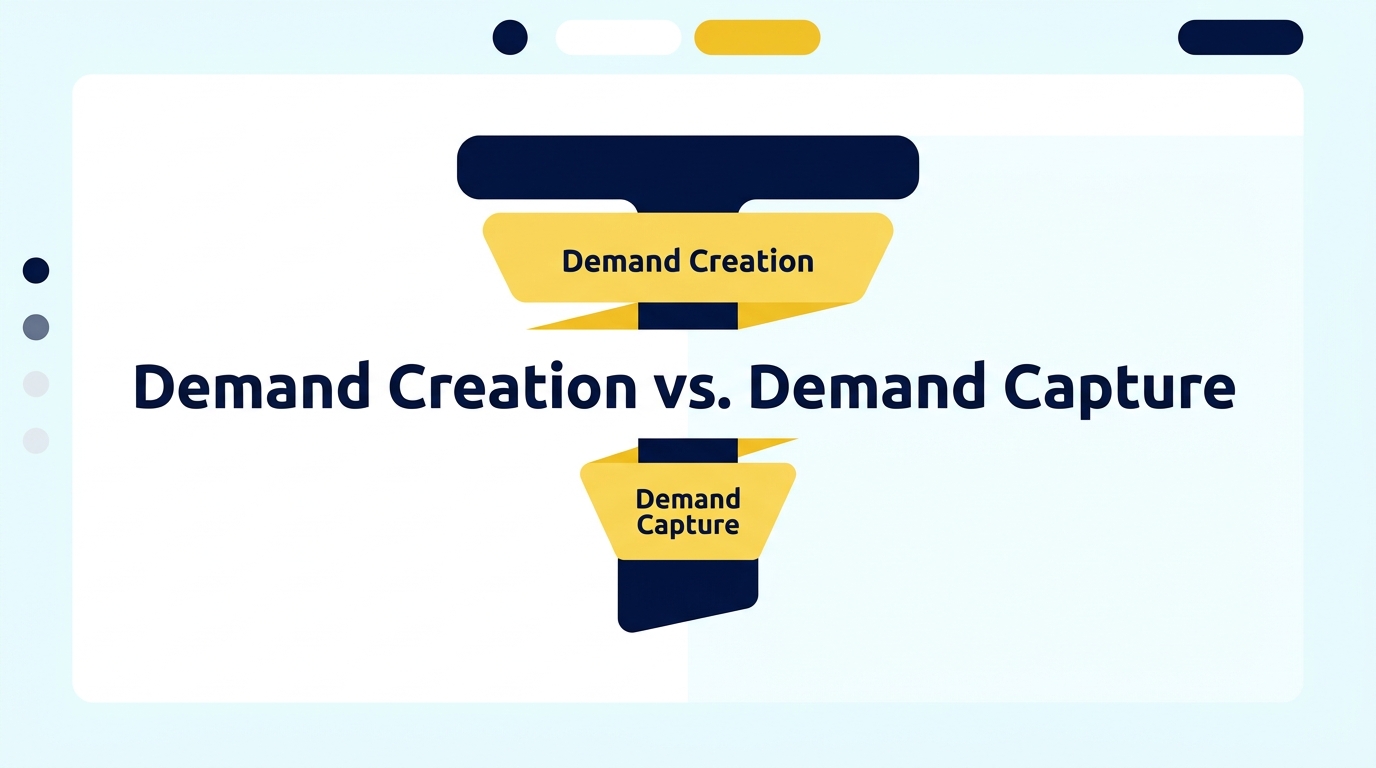
To stop platform cannibalisation, you must first understand the fundamental psychology of how users interact with different networks. The most successful brands do not view these platforms as competitors. Instead, they treat them as a unified ecosystem where each network plays a highly specialized role. Running Meta and Google together is not about redundancy. It is about the division of labour.
Meta as the Hunter (Demand Creation)
Meta operates as the ultimate digital hunter. It wins when the audience is not actively searching for your product yet. Its algorithm is unparalleled in pattern recognition and psychographic targeting. Users do not log into Facebook or Instagram with a specific intent to purchase a product or solve a business problem. They are there to consume content. Meta’s job is to intercept that attention, introduce a problem they recognise, and position your product as the resolution.
This is the essence of demand creation. Meta pushes your brand into the feeds of your ideal demographic, educating them on their pain points and planting the seed of intent. The algorithm learns who responds to a specific message and actively finds more people with similar behaviours and purchasing signals. This is pre-intent marketing. Without a strong hunting mechanism, your top-of-funnel pipeline will eventually dry up, leaving you entirely dependent on existing market awareness.
Google as the Gatherer (Demand Capture)
If Meta is the hunter that creates the desire, Google is the gatherer that harvests it. Google wins when the audience is already in motion. Search is the purest form of demand capture because the user declares their intent. When a user types a specific problem, a competitor name, or your brand into a search engine, they are actively looking for a solution. They are at the bottom of the funnel and ready to convert.
Google excels at capturing the demand that Meta generated. Your job on Google is to be present with the right offer and remove friction from the purchasing decision. A healthy demand capture layer includes comprehensive brand search coverage so competitors cannot harvest the demand you paid to create, alongside non-brand search coverage for high-intent queries that map directly to your offer.
The Synergy Effect
This delayed interaction is where the magic of a unified ecosystem happens. A highly optimized Google and Meta ads strategy recognizes that these two platforms rely on each other. People often see a Meta ad while commuting, absorb the information, but fail to click because the timing is inconvenient. Two days later, sitting at their work desk, they remember your brand and search for your specific product name on Google.
Meta feeds the search volume; Google catches the conversions. If you turn off Meta, your Google search volume will slowly decay. If you turn off Google, your competitors will bid on your brand terms and steal the customers that your Meta ads worked so hard to educate. Understanding this synergy is the first step toward building a precision-engineered marketing machine.
The Cannibalisation Trap: How Platforms Double-Dip on Your Ad Spend
While the synergy between platforms is powerful, it introduces a severe technical risk. Ad platforms are designed to maximize their own perceived value. If left unchecked, they will actively steal credit from one another. Cannibalisation is not just spending too much money. It is spend that steals credit or conversions from another campaign you are already paying for.
The Performance Max (PMax) Retargeting Trap
Google’s Performance Max campaigns are notorious for this behaviour. PMax is highly automated, utilizing machine learning to serve ads across Google’s entire network: Search, Display, YouTube, Discover, and Gmail. While powerful when tightly controlled, PMax operates largely as a black box and can quietly become a retargeting machine that inflates Google’s performance by harvesting conversions created elsewhere.
Here is the core trap: Meta introduces your offer and creates demand. The user visits your site, browses your products, and becomes a warm lead. PMax detects this warm user and aggressively retargets them across the Google Display Network and YouTube. When the user finally converts, Google claims the conversion, and PMax looks incredibly efficient.
The result is a dangerous illusion. Google’s reported return on ad spend rises, Meta’s reported return falls, and you shift budget away from the Hunter because the Gatherer appears to be performing better. Over time, the top of your funnel dries up. You must avoid ad cannibalisation by strictly segmenting your PMax audience signals. Separate brand from non-brand search, use account-level negative keywords, and ensure PMax focuses on net-new customer acquisition rather than simply sweeping up Meta's traffic.
The Attribution Overlap
Even if you manage PMax perfectly, attribution overlap can still distort your decision-making. The technical foundation of this cannibalisation lies in how platforms define a conversion window. By default, Meta often uses a 7-day click and 1-day view attribution window. Google utilizes its own data-driven attribution models within its ecosystem. If a user views a Meta ad on Monday, clicks a Google Search ad on Wednesday, and purchases on Thursday, both platforms will record a conversion in their respective dashboards.
The Golden Ratio: Budget Allocation for Maximum ROI
To prevent cannibalisation and ensure sustainable scaling, you must implement a strict budget allocation framework. A budget split is not a rigid rule, but rather a starting architecture that respects the physics of the marketing funnel. For most scaling businesses, the baseline allocation that provides the optimal balance is 60 to 70 percent of the budget dedicated to Meta for discovery and demand creation, and 30 to 40 percent dedicated to Google for capture and conversion.
This ratio works because demand capture is constrained by demand availability. You cannot spend your way to infinite search volume for high-intent queries. Demand creation, however, expands the pool of future buyers. You must cast a wide net on Meta to find the specific subset of users who will eventually convert. Google requires less budget to achieve a conversion because the user has already done the heavy lifting of identifying their own problem.
Tracking & Attribution: Building a Single Source of Truth
A dual-platform strategy is entirely useless without a rigid, scientifically accurate tracking infrastructure. If your tracking is weak, your strategy becomes expensive guesswork. The goal is not to gather more data inside each platform. The goal is to establish consistent data across platforms, tied back to real business outcomes.
Server-Side CAPI Tracking
Relying exclusively on traditional browser pixels is a dead strategy. Since the rollout of iOS privacy changes, cookie restrictions, and the widespread adoption of ad blockers, browser-based tracking loses a significant percentage of conversion data. Implementing server-side CAPI tracking is non-negotiable for serious marketers. Instead of relying on the user's browser to send a signal back to the ad network, server-side tracking sends the conversion data directly from your server to the ad platform's server.
A Bulletproof UTM Framework
To understand the true customer journey across multiple touchpoints, you must implement a standardized UTM framework. UTMs are the connective tissue between ad clicks and your analytics software. Every single ad on Meta and Google must contain dynamic UTM parameters tracking the source, medium, campaign name, and specific ad creative. A bulletproof UTM setup allows you to see exactly how Meta demand generation and Google demand capture interact in real-time.
Looker Studio Dashboards
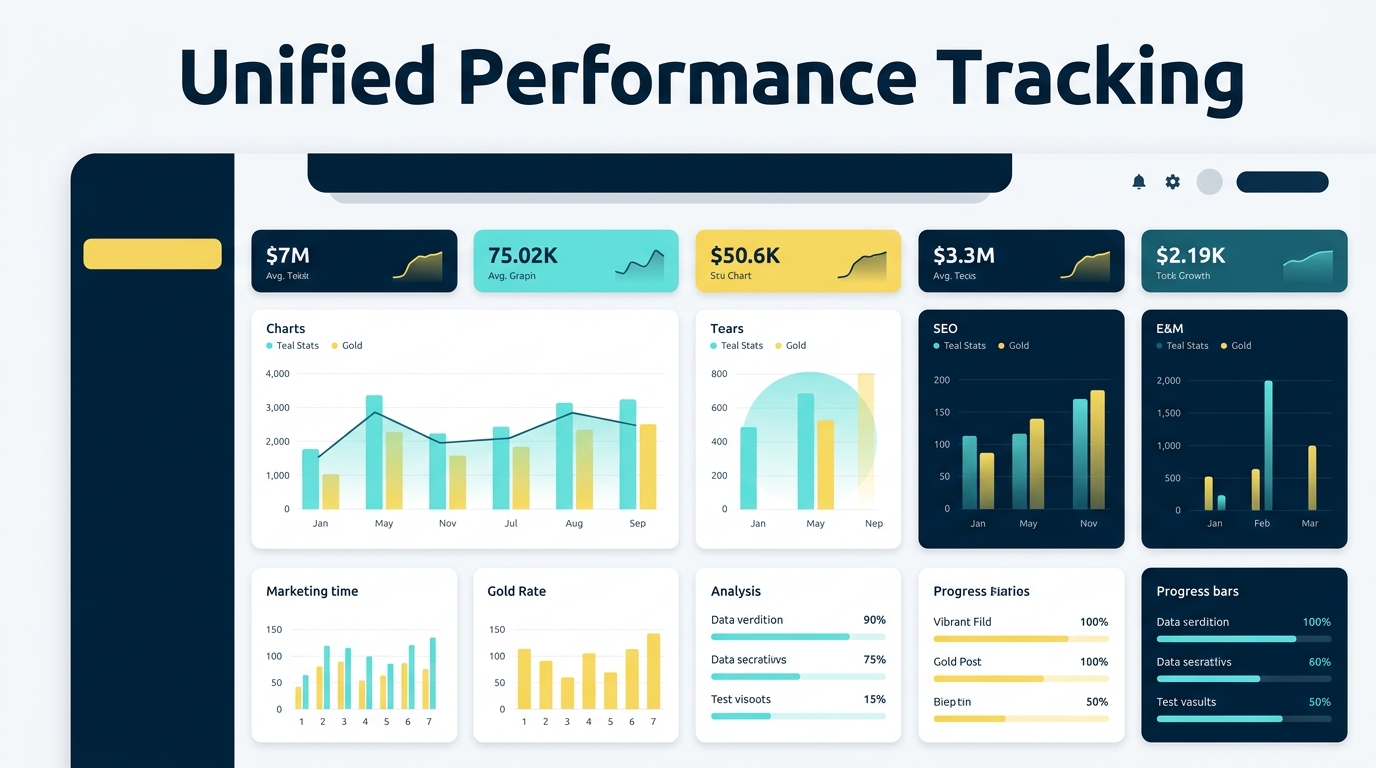
Once your server-side tracking and UTM frameworks are established, you must pull this data out of the biased ad platforms and into a neutral environment. By aggregating data from Meta, Google, and your backend CRM into a single dashboard, you achieve true multichannel campaign management clarity. This single pane of glass allows leaders to make rapid, confident decisions based on actual business revenue.
Incrementality Testing: Proving Real Business Growth
Attribution tells you who touched the sale. Incrementality tells you what actually caused the sale. Even with perfect tracking, attribution models are fundamentally flawed because they rely on correlation. To prove real business growth, you must graduate to incrementality testing.
Holdout Tests
A holdout test removes ads from a controlled slice of your audience and compares the outcomes. In this scenario, you deliberately exclude a randomized 10 percent of your target audience from seeing your Meta or Google ads. If your ad platforms claim they generated 100 sales, but the holdout group converted at the exact same rate as the exposed group, your ads are not driving incremental growth.
Geo-Experiments
Geo-experiments take incrementality testing a step further by isolating specific geographic regions. You might heavily scale your Meta and Google budgets together in Bristol, while holding ad spend completely steady in Manchester. By comparing the total business revenue in Bristol against the control group in Manchester over a 30-day period, you can definitively prove the blended impact of your platforms working in synergy.
The Solution: Unifying Your Strategy with the Paid Ads Engine
Managing a sophisticated, dual-platform strategy is fraught with technical peril. Balancing budget ratios, navigating PMax retargeting traps, configuring server-side APIs, and building unified Looker Studio dashboards is not a part-time job. It is a full-time discipline that requires deep domain expertise and constant optimization.
Generic templates and automated software tools cannot account for the nuance of your specific business economics. You need a bespoke system tailored to your exact operational requirements. This is why we built the Paid Ads Engine: unified, worry-free management across Meta and Google, engineered by expert marketers who care about business outcomes, not platform politics.
We function as your comprehensive marketing department. We do not just launch ads; we architect the entire ecosystem. From establishing bulletproof server-side tracking to executing complex incrementality tests, we handle the technical heavy lifting. Our unified management approach ensures that your Meta and Google campaigns operate in perfect harmony, driving genuine business growth while eliminating wasted spend. Stop wrestling with fragmented data and competing agencies. Let us build a precision-engineered system that scales with absolute certainty.
Ready to stop the budget bleed? Book a Campaign Strategy kickoff for the Paid Ads Engine today.
Frequently Asked Questions (FAQs)
What is the best budget split for a Meta Ads and Google Ads together strategy? For most scaling businesses, allocating 60 to 70 percent of your budget to Meta for demand creation and 30 to 40 percent to Google for demand capture yields the best results. This ensures you are constantly feeding the top of your funnel while having enough budget to capture high-intent searchers at the bottom.
How do I stop Google Performance Max from cannibalising my Meta Ads traffic? You must strictly segment your PMax audience signals and utilize customer match lists to exclude recent website visitors or existing customers where possible. Treat PMax as a controlled component, separate brand search into its own dedicated campaign, and force Google's algorithm to hunt for net-new acquisitions.
Why do Google and Meta report more sales combined than I actually have in my Shopify or Stripe? This is caused by overlapping attribution windows. If a user views a Meta ad and later clicks a Google ad before purchasing, both platforms will claim 100 percent of the credit for that single transaction. You must rely on a neutral third-party dashboard to see your true blended acquisition costs.
Do I need server-side tracking if I am running both Meta and Google ads? Yes, it is absolutely essential. Browser-based pixels lose a significant amount of data due to ad blockers and privacy updates. Server-side tracking sends conversion data directly from your server to the platforms, ensuring accurate attribution and stabilizing performance.
Want to build marketing systems like this?
Book a Discovery CallRelated Articles
How to Build an AI Video Content Strategy Marketing Engine: Scripts, Briefs, and Scale
Build an AI video content strategy marketing engine. Automate scripts, production briefs, and distribution at scale without sacrificing brand quality.
Read more →
What Is an AI Marketing Roadmap and Why You Need One Before Spending Another Pound on Tools
Discover why 72% of AI investments fail. Learn how to transition from "tool sprawl" to a Strategic Growth Architecture with a proper AI marketing roadmap and a precision-engineered implementation plan.
Read more →
How to Calculate the True ROI of Hiring an SDR vs Building an AI Outbound System
Discover the true SDR vs AI outbound system ROI. Compare fully loaded human headcount costs against custom AI automation for scalable B2B lead generation.
Read more →