Relevance AI for Marketing: How to Build Multi-Agent Systems That Actually Work
26 March 2026 • By Jakub Cambor, Founder of AI for Marketing | Top 1% Upwork Expert Vetted Talent
Last updated: 26 March 2026
Marketing leaders are currently facing a profound operational bottleneck. The initial excitement surrounding generative artificial intelligence has settled, leaving many teams paralyzed by implementation fatigue. Founders and marketing directors recognize that the gap between businesses leveraging advanced automation and those relying on manual processes is widening daily. Yet, the reality of scaling content production and campaign management often forces a compromise between volume and quality.
Relying on generic prompts typed into a standard chat interface is no longer sufficient to maintain a competitive edge. Amateurs use basic chat tools to generate isolated pieces of text. Professionals build precision-engineered systems. This is where Relevance AI marketing solutions bridge the gap between theoretical automation and practical, revenue-generating infrastructure.
To scale operations without sacrificing the nuanced brand voice that builds trust, businesses must move beyond isolated tools. They require a cohesive ecosystem of specialized programs working in synergy. This guide demystifies the process of constructing production-grade agentic workflows. By understanding the mechanics of orchestration, tool integration, and strategic deployment, you can transform complex marketing challenges into streamlined, automated engines that amplify your core strategy.
The Evolution of AI in Marketing: Moving from Static to Dynamic Reasoning
The application of artificial intelligence in commercial strategy has undergone a structural shift. Early adoption was characterized by static interactions. A user would input a specific request, and the software would return a singular output. This linear model is useful for discrete tasks, such as drafting an email or summarizing a report, but it breaks down when applied to the multi-layered complexities of a full-scale digital strategy.
Dynamic reasoning shifts the unit of value from single responses to comprehensive workflows. Instead of waiting for a human operator to dictate every micro-step, a dynamic platform allows users to define a broader business objective. The system then autonomously breaks that objective down into a sequence of logical operations. It determines what data is required, which tools to access, and how to sequence the work to achieve the final goal.
This shift is critical for businesses looking to scale without hiring linearly. When you rely on static tools, the human operator remains the primary bottleneck. Every action requires manual initiation and oversight. Dynamic reasoning shifts the human role from an operator to an orchestrator. Marketers can focus on high-level strategy and creative direction while the system handles the heavy lifting of research, data processing, and initial execution.
Relevance AI sits in that agentic layer. It is designed to build, run, and monitor workflows that look more like an operations pipeline than a chat window. Mastering the foundational steps of how to build an AI agent requires a strategic approach to data integration and logical sequencing. The goal is not just to automate a task, but to engineer a reliable process that consistently delivers high-quality outputs aligned with your specific commercial objectives.
Single Agents vs. Multi-Agent Systems (MAS): What is the Difference?
A common implementation mistake is assuming every marketing problem needs a single, highly capable agent designed to handle a variety of requests. However, this centralized approach inevitably hits a performance ceiling.
A single agent works well when the task is linear, the context is limited, and the output can be validated quickly by a human. Where a single agent hits a ceiling is campaign reality. Campaigns require sequencing, handoffs, and checks. A single agent asked to plan, research, write, validate, format, and publish tends to produce plausible output that is inconsistently grounded. It becomes overwhelmed by the competing requirements of analytical research and creative writing, leading to generic or factually inconsistent results.
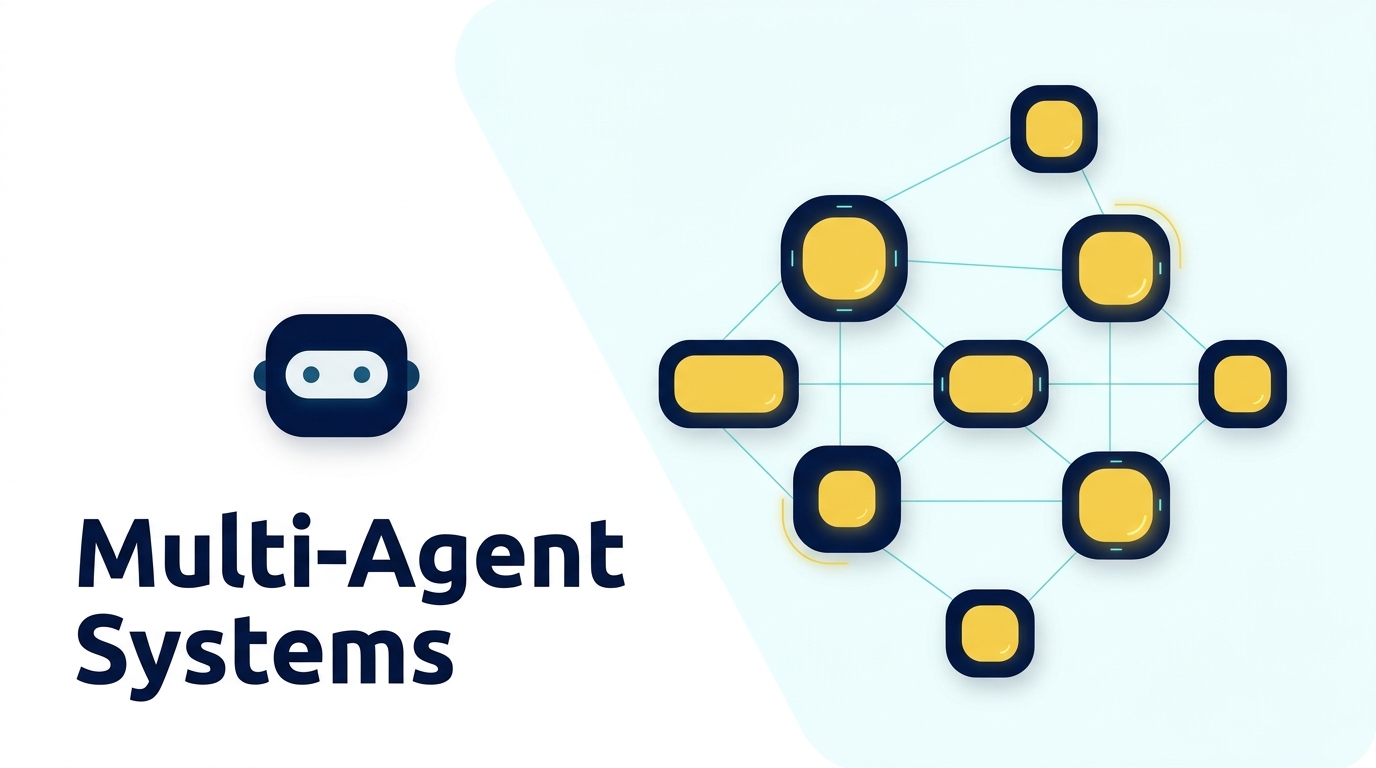
Multi-agent systems marketing refers to a collection of autonomous AI programs collaborating toward a common goal. Instead of one generalist to do everything, you build a small organization of specialists. As the industry matures, the application of multi-agent systems in marketing is shifting from a theoretical concept to a mandatory operational standard for high-performing teams.
A practical MAS is defined by four characteristics. First is autonomy: each agent operates independently within its defined parameters. Second is interaction: agents pass outputs to each other and challenge assumptions. Third is adaptability: workflows change based on signals. Finally, decentralization ensures there is no single point of failure. The workload is distributed, ensuring faster processing times and higher quality outputs.
The Architecture of Multi-Agent Systems in Marketing
Agentic workflows succeed or fail at the architecture level. Adding more agents does not automatically improve outcomes. The difference between a basic demo and a production system is how precisely roles are decomposed, how work is routed, and how quality is enforced.
The foundation of a reliable Relevance AI marketing engine relies on the Task vs. Role framework. Marketing leaders naturally think in roles: SEO manager, copywriter, PPC specialist. AI systems work better when you convert those roles into tasks. For example, you do not build an SEO Agent. Instead, you engineer a Researcher Agent, a Writer Agent, and an Editor Agent. This framework reduces cognitive load per agent, improving reliability.
Once the roles are defined, you must determine the architectural structure of the system. Properly structuring an autonomous multi-agent AI system requires careful planning to ensure each program understands its specific hierarchy and reporting lines within the broader workflow.
- • Hierarchical: A top-down management structure where a manager agent delegates to subordinates.
- • Holonic: Nested agents acting as both individual entities and parts of a larger whole.
- • Coalition: Temporary alliances formed for a specific, short-term campaign.
- • Team: A stable group of agents with long-lived memory and shared standards.
High-Impact Marketing Use Cases for Agentic Workflows
The true value of Relevance AI workflows becomes apparent when theory is translated into practical, revenue-driving infrastructure. At AI for Marketing, we view these systems not as isolated tasks, but as perpetual engines designed to augment your existing team.
1. Content Intelligence Networks
Scaling organic traffic requires a high volume of expertly crafted content. A Content Intelligence Network automates the entire production pipeline while safeguarding brand integrity. The workflow begins with a Strategy Agent identifying keyword gaps, followed by a Research Agent scraping authoritative sources. A specialized Writer Agent drafts the content, and an Editor Agent reviews it against the initial brief. The human marketing director simply reviews the final, polished draft.
2. PPC and Campaign Intelligence
Managing paid media requires constant vigilance. Agentic workflows excel in this high-velocity environment. An Analytics Agent continuously reviews ROAS data and identifies underperforming assets. It communicates these findings to a Copywriting Agent, which generates new variations. A Deployment Agent then initiates A/B tests. This creates a closed-loop optimization system that reduces wasted ad spend.
3. Real-Time Social Conversion
By integrating Relevance AI with your social channels, you can deploy a monitoring coalition. A Listening Agent tracks brand mentions. When a high-intent trigger is identified, a Profiling Agent analyzes the user's data. A Response Agent then drafts a personalized reply. If the interaction indicates a sales opportunity, a Routing Agent instantly flags the context to a human sales representative.
Orchestration, Technical Frameworks, and Mitigating Risks
The biggest misconception about multi-agent systems is that the agents themselves are the hard part. The hard part is orchestration: the rules of engagement, the data flow, and the quality gates. Professional implementations often utilize frameworks like LlamaIndex for precise data indexing and CrewAI for managing complex handoffs.
However, deploying advanced technology is not without risk. Poorly configured systems suffer from miscoordination or agent conflict. Most critically, error propagation can occur if a Research Agent hallucinates a statistic and subsequent agents build a campaign around it.
The solution is the strict implementation of a human-in-the-loop philosophy. AI for Marketing firmly believes in the synergy of human creativity and machine efficiency. These systems are designed to augment your expertise, not replace your marketing department. By engineering mandatory approval gates, we ensure that your team retains total control over strategic direction and final publication.

Building Your Engine: Why Implementation Requires an Expert Partner
The modern business leader faces a scale versus quality paradox. You want output volume, but you also need brand consistency, data security, and repeatable quality assurance. The market is flooded with software providers selling access to tools, but very few offer the AI marketing implementation expert capability required to make those tools actually work for your specific business model.
This is where AI for Marketing emerges as your trusted partner. We are founded by expert marketers, not just software developers. We understand the nuance of search intent and the necessity of protecting your brand voice. We do not sell generic templates; we build bespoke, precision-engineered Content Engines.
Instead of struggling with API keys and fragmented tools, partner with AI for Marketing to build custom multi-agent marketing solutions precision-engineered for your business strategy. With dedicated account managers and a commitment to complexity simplified, we transform your marketing operations into a scalable, high-performance ecosystem.
A Practical Build Blueprint for Production-Grade Systems
To make this actionable, follow this blueprint for scoping multi-agent systems:
- • Define Objectives: Use operational targets (e.g., 12 SEO pages per month).
- • Lock Constraints: Define brand voice rules, banned phrases, and compliance guardrails.
- • Engineer Retrieval: Ensure outputs are grounded in your proprietary business documents.
- • Quality Assurance: Design a series of gates for structure, tone, and factual accuracy.
- • Measure and Iterate: Track cycle time, error rates, and performance movement.
This is how a multi-agent system becomes a reliable engine: it improves over time through structured iteration and expert oversight.
Frequently Asked Questions (FAQs)
What is a multi-agent system in digital marketing? It is a network of specialized, autonomous AI programs that collaborate to execute complex campaigns, assigning specific tasks like research and writing to individual agents.
How does Relevance AI differ from standard ChatGPT? Relevance AI facilitates dynamic reasoning and automated workflows where agents autonomously plan and execute multi-step projects, rather than relying on linear, manual prompting.
Can multi-agent AI systems replace my marketing team? No. They are designed to handle time-consuming data processing and drafting, allowing your team to focus on high-level strategy and creative direction.
What is the Task vs. Role framework? It is a methodology where broad human roles are broken down into programmable, discrete tasks, ensuring higher quality outputs and reducing systemic errors.
How long does it take to implement a custom workflow? Timelines vary based on complexity, but working with an expert partner ensures a streamlined process from strategy to a fully operational engine.
Want to build marketing systems like this?
Book a Discovery CallRelated Articles

AI Email Marketing: Beyond Drip Sequences
AI email marketing moves beyond basic rule-based automations to intelligent systems that personalise content, optimise send times, generate copy, and adapt sequences based on recipient behaviour in real time.
Read more →
AI Marketing Strategy Framework (2026)
An AI marketing strategy is a structured plan for integrating artificial intelligence into your marketing operations. This framework covers the maturity audit, prioritisation, the build sequence, KPIs, and common strategic mistakes.
Read more →
AI Content Creation: Scale Without Losing Quality
AI content creation is the use of artificial intelligence to research, draft, edit, and optimise marketing content. Learn how to scale production with quality gates, brand DNA frameworks, and workflows that keep the human where it matters.
Read more →