CRM Integration for AI Lead Generation: How to Sync Every Outbound Interaction Automatically
30 March 2026 • By Jakub Cambor, Founder of AI for Marketing | Top 1% Upwork Expert Vetted Talent
Last updated: 30 March 2026
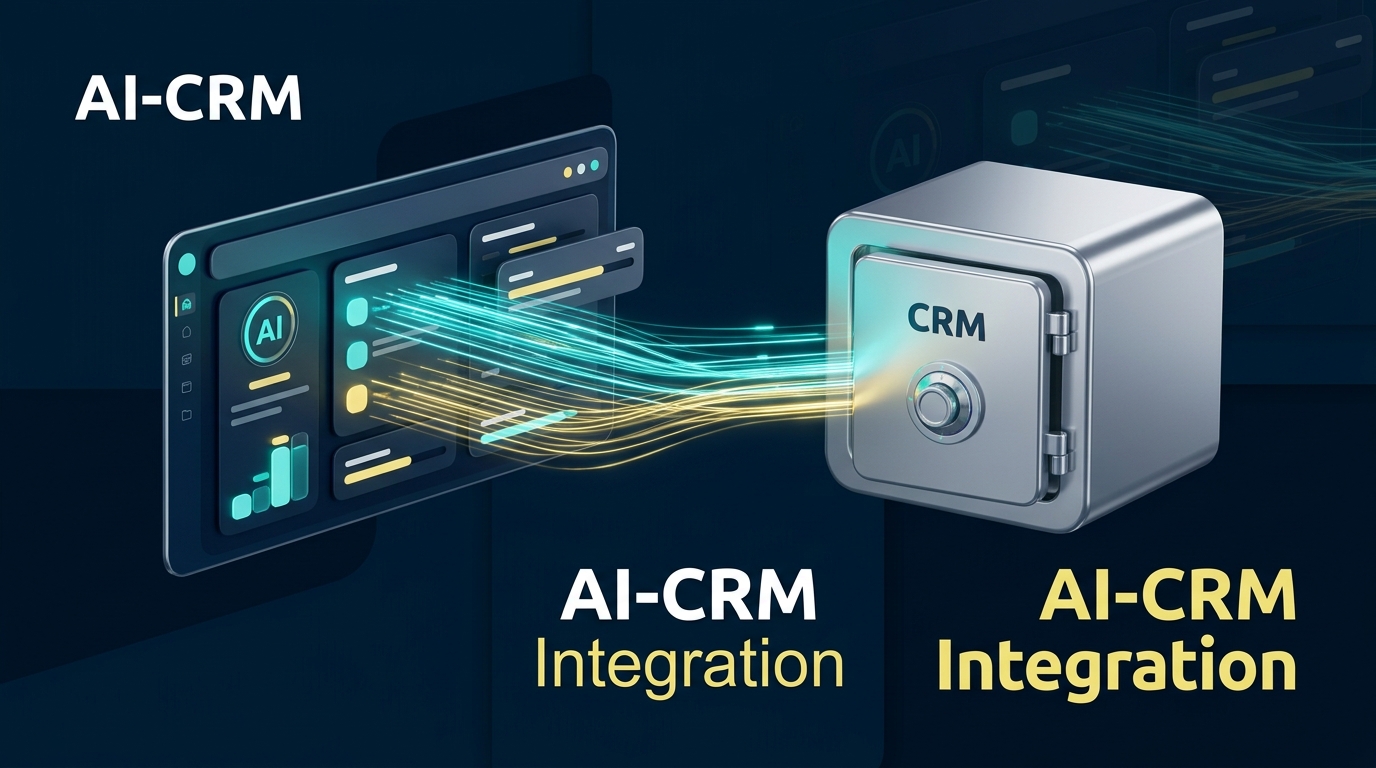
Modern sales and marketing teams face a critical operational bottleneck. Highly skilled professionals are increasingly bogged down by administrative burdens, transforming expensive talent into glorified data entry clerks. This administrative friction creates a massive gap between potential revenue and actual closed deals. Implementing seamless CRM integration AI lead generation is the definitive solution to this systemic inefficiency.
The core issue is the SDR time leak. Sales Development Representatives and account executives are hired to build relationships, negotiate contracts, and drive revenue. Yet, industry research reveals that sales professionals spend only 36.6% of their time actually selling. Nearly a fifth of their working hours is drained by manual CRM management, logging calls, and updating pipeline stages. This is a catastrophic misallocation of human capital.
At AI for Marketing, we champion the philosophy of the bionic marketer. Technology should augment human capability, never replace the nuance of human relationship building. Artificial intelligence removes the manual grind of data entry so your team can focus entirely on high-level strategy and client interactions. When AI handles the administrative heavy lifting, human creativity is amplified.
This manual data entry crisis also creates the "dark pipeline." These are the valuable outbound interactions: the quick LinkedIn messages, the brief follow-up calls, and the forwarded emails that never get logged. When humans run out of time or simply forget to update the database, critical buying signals vanish. Automated synchronization ensures every single touchpoint is captured, categorized, and leveraged for future growth.
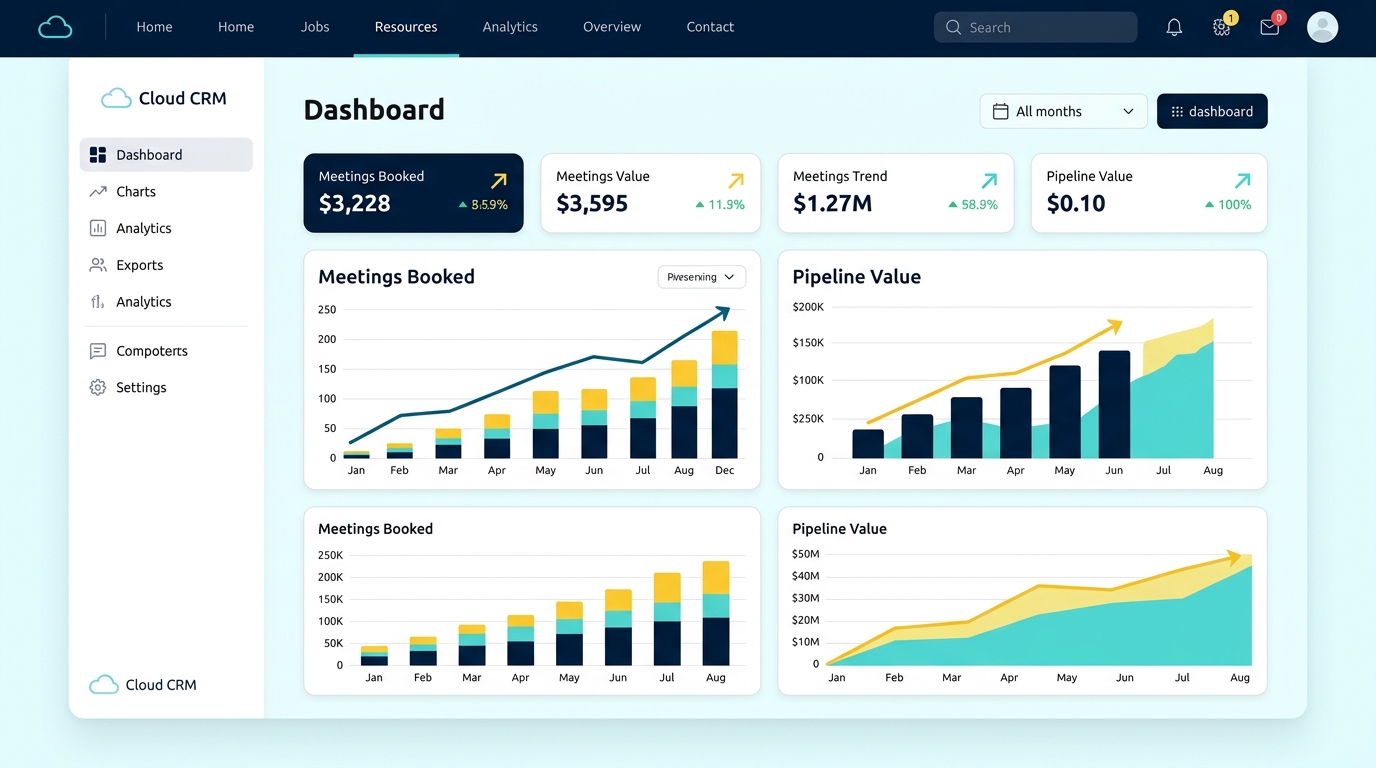
What is CRM Integration for AI Lead Generation?
At its core, CRM integration AI lead generation is the seamless, automated flow of data between your prospecting tools and your central database. It transforms a static repository of contacts into a dynamic, intelligent engine. This is not about simple data transfer: it is about creating a unified ecosystem where artificial intelligence and your customer relationship management platform communicate in real time.
The foundational rule of modern sales is that the CRM serves as the single source of truth. If an interaction is not recorded in the CRM, from a management and forecasting perspective, it simply did not happen. Relying on human memory or disparate spreadsheets shatters this single source of truth. An automated AI CRM sync guarantees that your database reflects reality with mathematical precision.
Historically, businesses relied on exporting CSV files, manual data entry, or disjointed generic ChatGPT prompts to manage outreach. This fragmented approach leads to duplicate records, missed follow-ups, and a disjointed customer experience. The modern standard demands a precision-engineered, bespoke ecosystem. In this environment, AI agents autonomously execute outreach campaigns while simultaneously updating the CRM with every granular detail of the interaction.
The Anatomy of a Precision-Engineered Sync: How It Actually Works
Understanding the mechanics behind this technology is crucial for modern business leaders. Demystifying the synergy between artificial intelligence and CRM architecture reveals exactly why automated outbound lead generation outpaces traditional methods. The architecture relies on robust application programming interfaces (APIs) and intelligent webhooks to facilitate instant communication.
The Power of Bi-Directional Syncing
Data must never flow in only one direction. A true bi-directional CRM integration ensures that both systems learn from one another continuously. When an AI agent identifies a highly qualified prospect and initiates contact, it instantly pushes that data into the CRM. It creates the contact record, logs the outbound email, and sets the lead status without any human intervention.
The reverse is equally vital. When a human sales representative updates a CRM status to "closed won" or "unqualified," that data flows back to the AI. The artificial intelligence uses this updated status to refine its future targeting parameters. If an account is marked as closed, the AI immediately halts any automated prospecting to that specific company, protecting your brand reputation from redundant outreach.
Seamless Coverage Across Major Platforms: HubSpot, Salesforce, and Pipedrive
A bespoke AI solution must integrate natively with your existing industry standards. You should never have to abandon your current infrastructure to leverage advanced technology. The AI acts as a sophisticated exoskeleton, wrapping around your existing tech stack to enhance its capabilities. This requires deep, native compatibility with the leading database providers on the market.
Executing a flawless HubSpot or Salesforce AI integration allows enterprise and mid-market teams to maintain their established workflows. Whether you rely on Salesforce for complex enterprise routing, HubSpot for inbound marketing synergy, or Pipedrive for visual deal management, the AI adapts to your architecture. It maps custom fields, respects existing validation rules, and operates silently in the background to keep your systems perfectly aligned.
Eliminating the "Dark Pipeline": What Data Should You Sync?
Capturing every interaction requires a highly structured approach to data architecture. The dark pipeline thrives on fragmentation. By categorizing and syncing specific data sets, businesses illuminate every corner of their sales process. A precision-engineered system captures four critical categories of information:
- • Lead Data: Manual research is entirely eliminated. The system automatically enriches contact profiles with accurate job titles, company sizes, industry verticals, and verified LinkedIn URLs.
- • Activity Data: Every single outbound touchpoint is recorded chronologically. This includes the exact timestamp of every email sent, opened, and replied to, providing sales representatives with complete historical context.
- • Qualification Data: The system syncs AI-driven lead scores and identified buying signals directly into custom CRM fields. If a prospect asks about pricing, the AI flags this intent and updates the lead score accordingly.
- • Status Updates: Pipeline management becomes autonomous. Based on the sentiment of a prospect's reply, the AI automatically moves the contact to the appropriate pipeline stage, such as "Meeting Booked" or "Nurture."
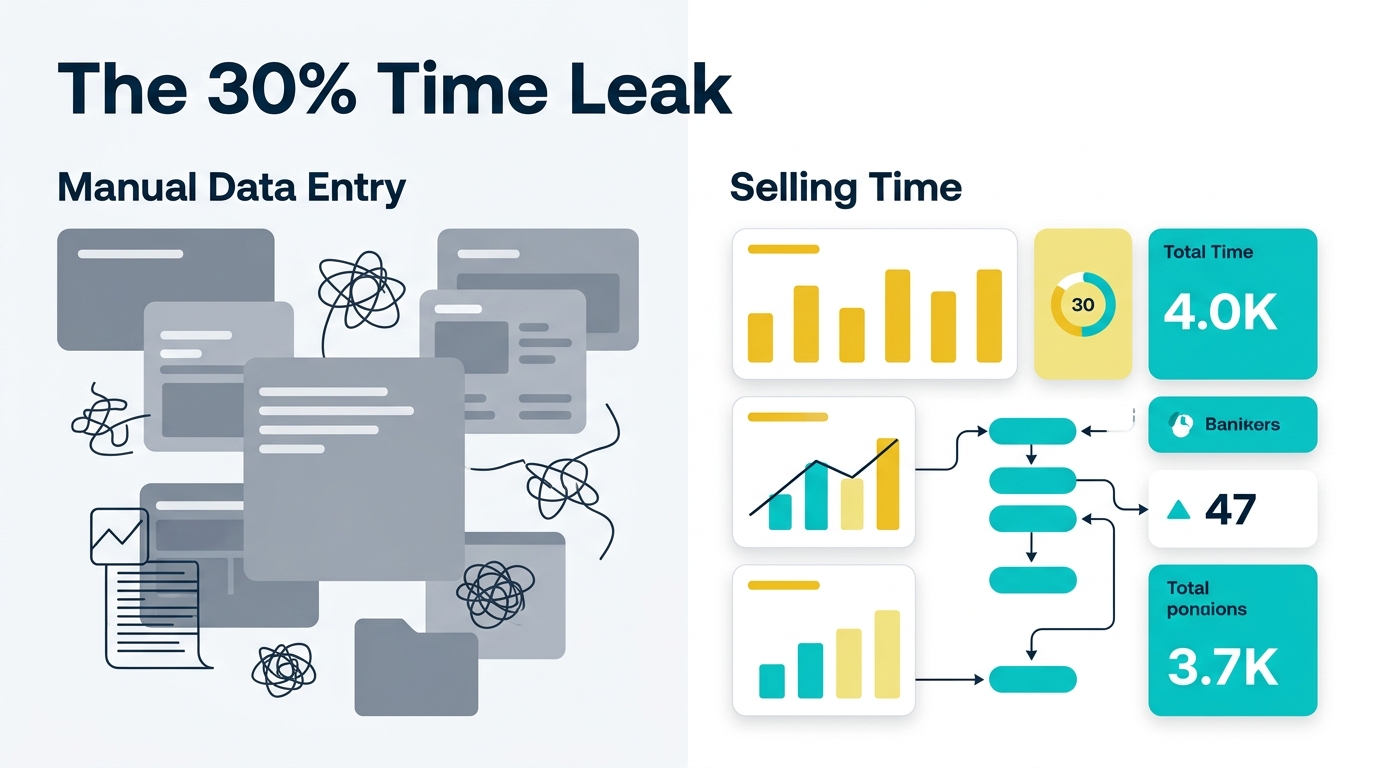
Strategic Benefits: Why Bespoke AI Integration Outperforms Manual Entry
The transition from manual data management to an automated ecosystem is a fundamental business strategy, not merely a technological upgrade. The financial implications of disconnected systems are staggering. Industry analysis from Gartner reveals that poor data quality costs organizations an average of $12.9 million every single year. Fragmented data leads to lost deals, alienated customers, and wasted marketing spend.
Automated integration directly combats these financial losses by enforcing absolute data integrity. When your CRM is perfectly synchronized with your outreach efforts, forecasting becomes a science rather than a guessing game. Leadership gains total visibility into the effectiveness of messaging, the velocity of the sales cycle, and the true cost of customer acquisition.
The empirical results of deploying precision-engineered AI sales automation tools are highly compelling. Organizations that eliminate manual CRM updates frequently report a 16% increase in customer retention and a 21% rise in overall team efficiency. These metrics validate the concept of strategy amplified: the AI handles the immense complexity of data routing, while your human team is liberated to execute high-level negotiations.
Step-by-Step: Implementing Your AI-to-CRM Ecosystem
Building a robust, automated infrastructure requires a methodical approach. Attempting to build this architecture internally often leads to broken APIs and corrupted data. Partnering with experts to deploy a bespoke Lead Generation Engine guarantees a seamless, done-for-you transformation.
Phase 1: Data Hygiene and Mapping
You cannot synchronize bad data. The foundational step is a rigorous audit and cleansing of your current CRM environment. This involves deduplicating existing records and standardizing formatting. Once the database is pristine, data mapping begins: every field in the AI prospecting tool must be precisely mapped to the corresponding property in your CRM.
Phase 2: Connecting the Infrastructure
This phase establishes the actual communication pathways between systems. Depending on your specific tech stack, this involves configuring native API connections or utilizing Enterprise Integration Platform as a Service (iPaaS) solutions. Webhooks are established to listen for specific trigger events, such as a new email reply, providing true real-time synchronization.
Phase 3: Configuring Rules and Monitoring
Technology requires business logic to function effectively. In this phase, specific operational rules are programmed. For example, a rule might dictate that if a prospect replies with an "out-of-office" message, the AI pauses outreach and automatically schedules a follow-up task for the human rep upon the prospect's return.
Phase 4: Enterprise-Grade Security
Handling sensitive customer data demands uncompromising security standards. A professional integration prioritizes data protection above all else. The architecture is engineered to ensure strict GDPR and CCPA compliance. All data transmitted between the AI tools and the CRM is protected via AES-256 encryption and Multi-Factor Authentication (MFA).
Beyond Basic Syncing: Advanced AI Capabilities for the Bionic Marketer
Establishing a bi-directional sync is only the baseline. Once the foundational integration is secure, businesses can unlock the true potential of the bionic marketer. Advanced capabilities transform your CRM from a digital filing cabinet into an active participant in your sales process.
- • Smart Agents: These autonomous workers do more than just log activities. They analyze the entire historical context of a CRM record and draft bespoke, highly personalized follow-up emails based on previous pain points mentioned by the prospect.
- • Predictive Scoring: This elevates lead qualification to a predictive science. Artificial intelligence analyzes complex patterns within your CRM data and monitors external buying signals, such as a target company securing a recent funding round, to predict immediate buying intent.
- • Conversational Intelligence: This integrates voice interactions directly into the database. Advanced voice agents automatically join sales calls, transcribe the conversation, and extract key action items, pushing concise meeting summaries directly into the CRM notes section.
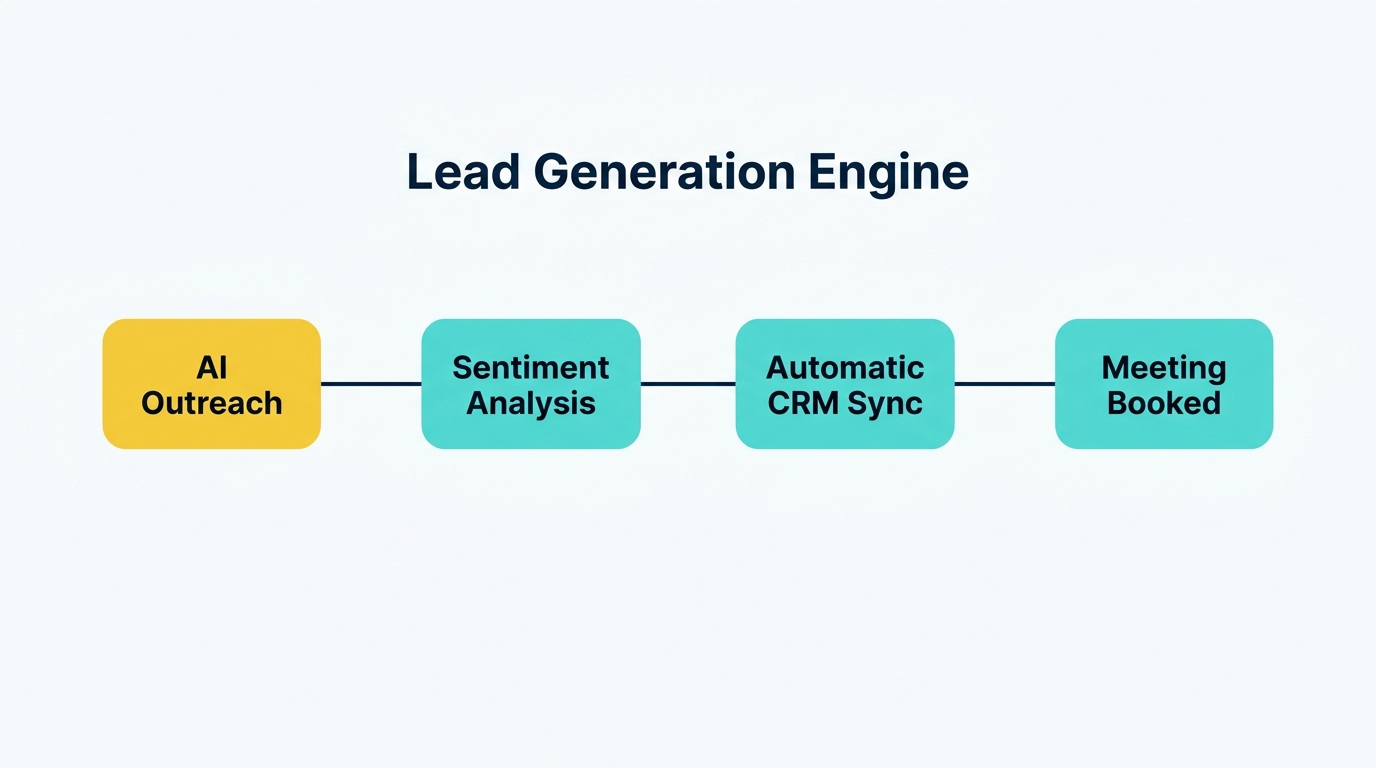
Conclusion: Complexity Simplified, Strategy Amplified
The era of treating highly skilled sales professionals as manual data entry clerks is officially over. The hidden costs of the SDR time leak and the untracked interactions of the dark pipeline are burdens modern businesses can no longer afford. Manual CRM updates are an archaic bottleneck that stifles growth and skews forecasting.
CRM integration AI lead generation solves this properly when it is built as a precision-engineered ecosystem. By implementing a bi-directional sync, you ensure that every single outbound touchpoint is automatically synchronized, categorized, and leveraged. This is the ultimate synergy of human creativity and artificial intelligence efficiency.
Stop relying on fragmented workflows and the unreliability of manual data entry. It is time to elevate your outbound strategy with a bespoke, automated ecosystem designed specifically for your business architecture. Book a strategy session with the expert marketers at AI for Marketing today, and let us build the fully integrated growth engine your business deserves.
Frequently Asked Questions (FAQs)
What is the best CRM for AI lead generation integration?
The most effective platforms offer robust, open APIs. HubSpot, Salesforce, and Pipedrive are industry leaders due to their developer-friendly architecture. A bespoke AI solution is platform-agnostic, meaning it is engineered to integrate with whichever major database your business currently utilizes.
Will AI overwrite existing data in my CRM by mistake?
No. A professionally implemented bi-directional sync utilizes strict data hierarchy rules. The system is programmed to respect existing data, meaning it will only enrich blank fields or update specific activity logs without overwriting critical human-entered notes.
Is AI lead generation data capture GDPR compliant?
Yes, provided the architecture is engineered correctly. Enterprise-grade AI integrations adhere strictly to GDPR and CCPA regulations, processing publicly available professional data and respecting localized opt-out requests instantly.
Want to build marketing systems like this?
Book a Discovery CallRelated Articles

AI Email Marketing: Beyond Drip Sequences
AI email marketing moves beyond basic rule-based automations to intelligent systems that personalise content, optimise send times, generate copy, and adapt sequences based on recipient behaviour in real time.
Read more →
AI Marketing Strategy Framework (2026)
An AI marketing strategy is a structured plan for integrating artificial intelligence into your marketing operations. This framework covers the maturity audit, prioritisation, the build sequence, KPIs, and common strategic mistakes.
Read more →
AI Content Creation: Scale Without Losing Quality
AI content creation is the use of artificial intelligence to research, draft, edit, and optimise marketing content. Learn how to scale production with quality gates, brand DNA frameworks, and workflows that keep the human where it matters.
Read more →