Mastering Content Marketing Paid Ads Strategy Integration: The Compound Growth Loop
29 March 2026 • By Jakub Cambor, Founder of AI for Marketing | Top 1% Upwork Expert Vetted Talent
Last updated: 29 March 2026
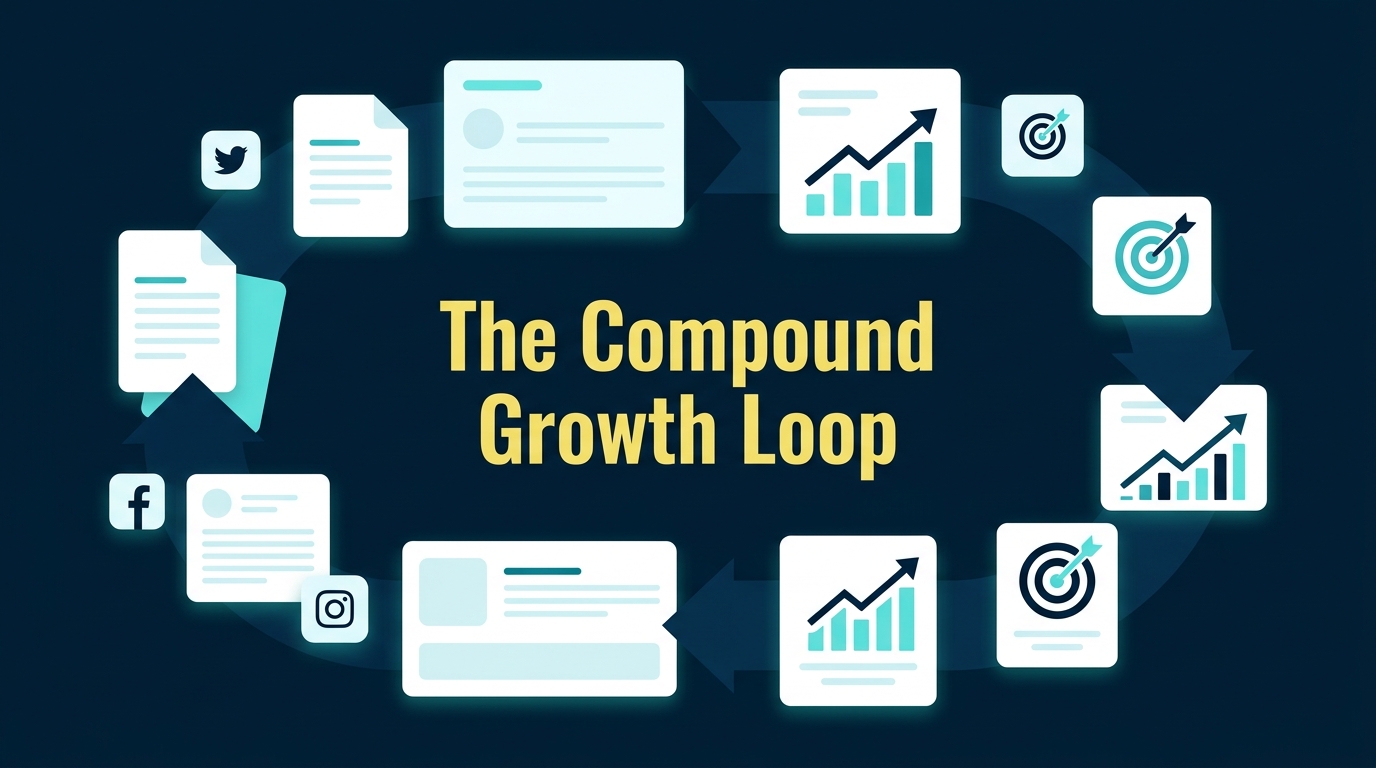
Modern marketing directors and founders share a common, expensive frustration: pouring thousands of pounds into paid advertising with unvalidated creatives, while their organic content sits isolated in a silo, generating vanity metrics but zero measurable revenue. This disconnect is not just inefficient; it is actively draining your marketing budget. When organic teams and paid acquisition teams operate independently, businesses suffer from fragmented data, misaligned messaging, and an unsustainably high Customer Acquisition Cost (CAC).
The solution requires a fundamental paradigm shift. At AI for Marketing, we do not believe in guessing, hoping, or relying on fragmented tactics. We believe in precision-engineered marketing systems built for the bionic marketer. The era of treating organic content and paid media as distinct disciplines is over.
This comprehensive guide reveals the mechanics of proper content marketing paid ads strategy integration. We will unpack the Compound Growth Loop, a definitive system where organic content serves as a rigorous testing ground to validate paid creative. By deploying a synchronized Content Engine and Paid Ads Engine, you will eliminate wasted ad spend, stop guessing what your audience wants, and build a self-sustaining marketing ecosystem that drives predictable, scalable revenue.
The Problem: Why Siloed Marketing Funnels Burn Your Budget
The traditional agency model has institutionalized a critical flaw in how businesses approach growth. Historically, companies have divided their marketing departments into separate camps. The content team focuses on blog posts, social media updates, and search engine optimization. Their metrics are often constrained to impressions, likes, and organic traffic. Meanwhile, the performance marketing team handles Google Ads, Meta Ads, and TikTok campaigns, entirely focused on direct response, conversion rates, and Return on Ad Spend (ROAS).
These two departments rarely communicate effectively. The content team creates assets based on editorial calendars, while the paid team builds ads based on assumptions or generic best practices. This creates deeply siloed marketing funnels. When data is siloed, the paid team is forced to test new creatives from scratch, spending real money to discover what messaging resonates with the target audience.
This approach relies heavily on the traditional linear funnel, a model that is inherently leaky and inefficient. A linear funnel requires a constant, aggressive injection of fresh capital at the top to push a small percentage of prospects out the bottom. If you stop spending, the machine stops working. Industry leaders are recognizing this inefficiency, noting exactly why linear funnels fail to provide sustainable, long-term business scaling. They demand too much manual effort and too much capital to maintain momentum.
The Cost of Unvalidated Creative
To understand the financial danger of siloed marketing, consider the cost of unvalidated creative. Imagine an agency owner or marketing director allocating £2,000 for a new Meta ad campaign. The creative team designs a visually appealing graphic, and the copywriter crafts a clever hook based on an internal brainstorming session.
The campaign launches. Over the next two weeks, the £2,000 budget is consumed by the algorithm as it searches for the right audience. The result is a dismal Click-Through Rate (CTR), high Cost Per Click (CPC), and zero qualified leads. The budget is gone, and the only return on investment is the painful realization that the messaging did not resonate.
This is the direct consequence of funding unvalidated concepts. The business paid £2,000 to learn a lesson that organic content could have taught them for free. Had that same messaging been tested as an organic LinkedIn post or a detailed SEO blog article, the lack of engagement would have served as an early warning system. By ignoring the data potential of organic channels, businesses routinely subsidize their own guesswork.
Demystifying the Compound Growth Loop
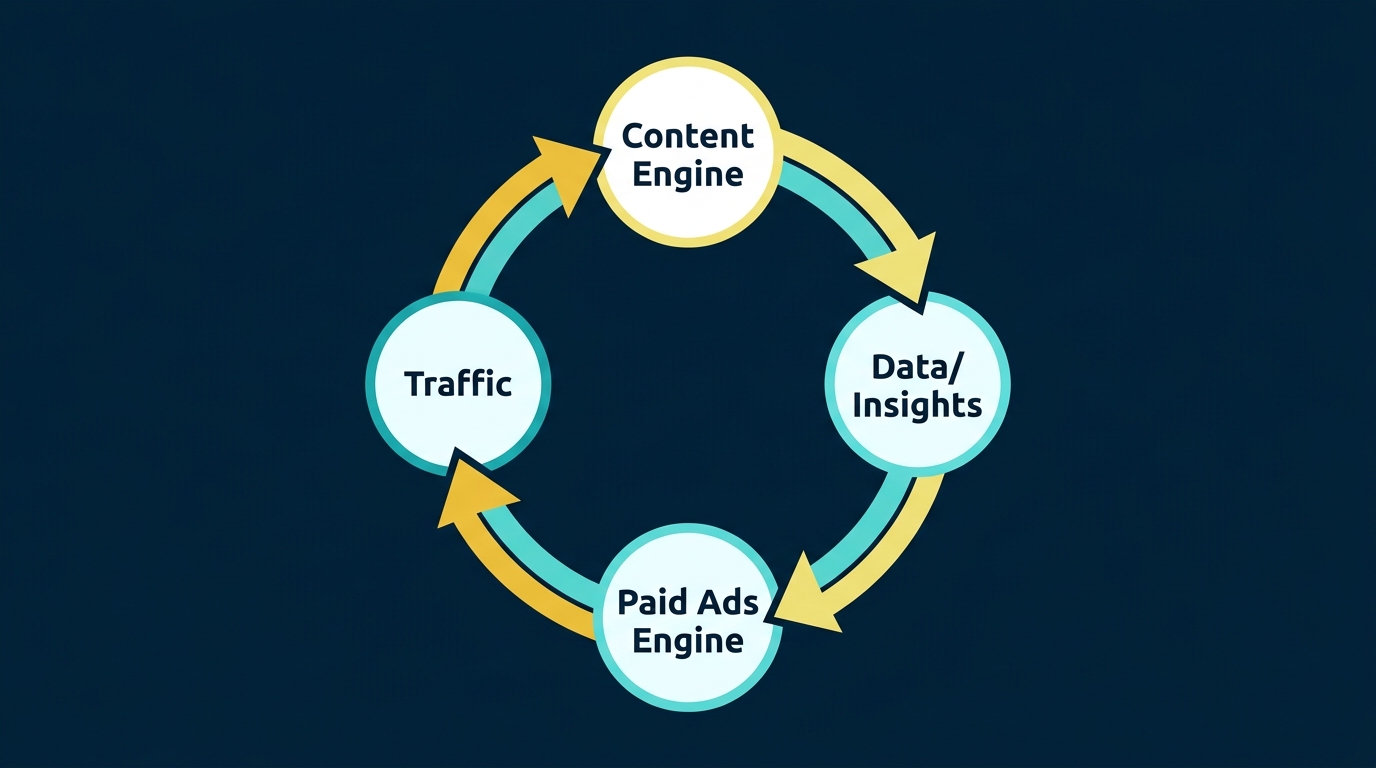
To fix the leaky funnel, businesses must transition to a closed-system architecture. This brings us to the core philosophy of the AI for Marketing Manifesto: the Compound Growth Loop. Instead of a straight line where capital goes in and a fraction of revenue comes out, marketing must function as a continuous circle. The outputs of one process must become the automated inputs of the next process.
The mechanics of compound growth loop marketing are precise and logical. The cycle begins with organic content creation. This content is pushed to the market. The market responds, generating data. This data highlights specific messaging angles, formats, and topics that naturally capture attention. These validated concepts are then transferred to the paid advertising department. Because the creative is already proven, the paid ads achieve higher engagement rates and lower costs. The paid campaigns then drive massive, targeted reach, bringing new audiences into the ecosystem. This new audience interacts with the brand, generating fresh data, which is fed back into the organic content strategy to inform the next cycle of creation.
This continuous reinvestment of data and revenue into acquisition creates a powerful compounding effect. It completely eliminates the guesswork from media buying. This methodology aligns perfectly with modern acquisition strategies that focus on creating growth loops that compound instead of burn budget, ensuring that every pound spent works harder than the last.
How Organic Insights Fuel Paid Performance
The most critical function of your organic content is not immediate lead generation; it is market research. Your organic social media feeds, email newsletters, and SEO blog posts operate as a free, high-speed testing environment.
When you publish a piece of content organically, you are presenting a hypothesis to your audience. The market provides immediate feedback through engagement metrics. A high CTR, strong read times, and active comment sections are undeniable signals. The market is explicitly telling you what it cares about.
By treating organic content as a testing ground, you shift your paid media strategy from a game of chance to a game of scale. You are no longer asking your ad budget to find a winning message; you are asking your ad budget to amplify a message that has already won. This is how organic content validates paid ads, drastically reducing your CAC and protecting your profit margins.
Step 1: Laying the Foundation with a Clarity Roadmap
You cannot automate a broken strategy, and you cannot scale confusion. Before deploying AI agents, building content engines, or allocating a single pound to paid advertising, a business requires absolute strategic clarity. Jumping straight into execution is the most common mistake overwhelmed pragmatists make when trying to integrate their marketing efforts.
The foundational step in proper content marketing paid ads strategy integration is the Clarity Roadmap. This is an exhaustive, diagnostic process where we define the exact parameters of your business ecosystem. We map the customer journey from total unawareness to closed-won revenue. We define the audience psychographics, identifying their core fears, desires, and trigger events. We also audit your existing assets to understand what historical data can be leveraged.
This strategic groundwork is what separates professional AI deployment from amateur experimentation. Generic ChatGPT prompts fail because they lack business context. An AI model cannot generate high-converting ad copy or insightful thought leadership if it does not deeply understand your unique value proposition and the specific pain points of your target market. The Clarity Roadmap provides the architectural blueprint. It aligns the AI infrastructure with your overarching business goals, ensuring that every piece of content and every ad campaign serves a deliberate, strategic purpose.
Step 2: Deploying the Content Engine to Find Winners
With the strategic foundation established, the first execution pillar is activated: the AI marketing Content Engine. The Content Engine is not a random assortment of scheduling tools; it is a systematic, high-volume production line designed to test multiple messaging angles simultaneously across various platforms.
The Content Engine operates by publishing high-quality, AI-augmented content on a rigorous weekly schedule. This includes thought leadership posts on LinkedIn for executive presence, deeply researched SEO blog articles to capture organic search intent, and targeted email newsletters to nurture existing leads.
It is crucial to understand that this process relies on the synergy of human creativity and AI efficiency. We do not believe in flooding the internet with robotic, low-value text. The AI handles the heavy lifting of research, structuring, and initial drafting, while human marketing experts refine the brand voice, inject industry nuance, and ensure absolute quality control. This allows a business to maintain a massive organic footprint without expanding its internal headcount.
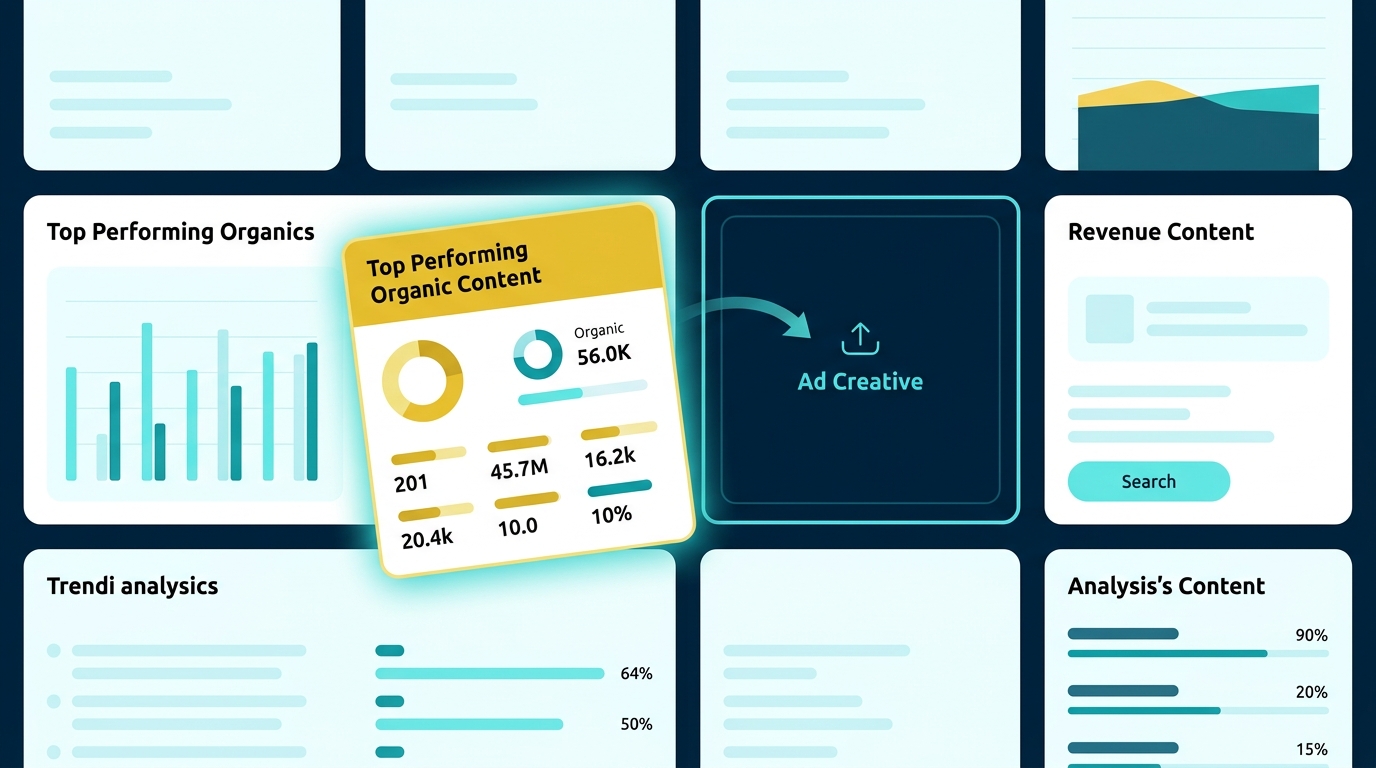
As the Content Engine publishes, it generates a wealth of performance data. This is where reporting dashboards, such as Looker Studio integrations, become vital. These dashboards aggregate the performance of every organic post, stripping away vanity metrics to focus on intent signals: dwell time, link clicks, profile visits, and share rates.
The objective of the Content Engine is not just to build brand awareness. Its primary function within the compound loop is to identify the winners. Out of twenty posts published in a month, the dashboards will highlight the top ten percent that generated disproportionate engagement. These winning pieces of content are the validated assets that will fuel the next stage of the system.
What Counts as a Winner
A winner is not simply the post that received the most superficial likes. It is the content that produces an outsized signal relative to its baseline, indicating genuine buyer interest.
Winners usually show at least one of these characteristics:
- • Disproportionate engagement rate relative to your typical posts.
- • Unusually high outbound click-through rate to an asset or landing page.
- • Strong retention metrics, such as video watch time or article scroll depth.
- • High-quality comments that reveal intent, specific objections, or distinct use-cases.
- • Assisted conversions clearly visible in your analytics attribution view.
By isolating these specific data points, the Content Engine removes human bias from the creative process. You are no longer debating which graphic looks best in a boardroom; you are letting the market dictate the creative direction based on hard, undeniable evidence.
Step 3: Scaling Success with the Paid Ads Engine
Once the Content Engine has identified the high-performing organic assets, the strategy transitions to the second execution pillar: the Paid Ads Engine. This is where the true power of content marketing paid ads strategy integration is realized.
The transition process is highly systematic. You extract the core messaging, the exact phrasing, and the visual elements from the organic winners and seamlessly convert them into paid advertising creatives. If a specific LinkedIn post about supply chain inefficiencies generated massive engagement from operations directors, that exact post is reformatted into a Meta ad, a LinkedIn sponsored content piece, or a YouTube video script.
Because the creative and messaging have already survived the rigorous testing ground of your organic audience, the risk of the ad failing is virtually eliminated. You are no longer spending money to test; you are spending money to scale. This is the ultimate method to reduce ad spend waste.
The Transition: From Organic Winner to Paid Asset
The most common reason boosting top posts fails is that teams treat it as a shortcut. Proper translation is far more deliberate. A practical process looks like this:
- • Select the winner: The post or content piece with the strongest combination of relevance and intent signals.
- • Extract the core components: Identify the hook that stopped the scroll, the problem framing that made the buyer care, the mechanism of change, and the credibility markers.
- • Produce paid variants: Generate multiple hook variations and adapt the core message into primary formats like static images, short videos, or carousels depending on the platform.
- • Match landing page and measurement: Ensure the landing page utilizes the exact same language as the winning post, with one clear conversion goal and proper event tracking for continuous optimization.
The Paid Ads Engine then leverages AI-driven media buying techniques for precision scaling. It utilizes machine learning algorithms for rapid A/B testing of minor variables like headlines and calls-to-action. It automates bid optimization to ensure you are acquiring impressions at the lowest possible cost. Most importantly, it uses hyper-targeted distribution to push these proven concepts to a broader, lookalike audience that mirrors the exact demographics of the people who engaged with the organic post. You are taking a validated message and putting it in front of thousands of highly qualified prospects who would never have found your organic channels naturally.
Creating a Self-Sustaining Marketing Ecosystem
The true brilliance of this architecture emerges when the Content Engine and the Paid Ads Engine operate simultaneously. They do not just share data once; they feed each other continuously, creating a self-sustaining marketing system.
When the Paid Ads Engine scales a winning creative, it drives massive amounts of new traffic, engagement, and conversion data. This paid reach brings entirely new segments of your target market into your ecosystem. As these new prospects interact with your landing pages and ad creatives, they generate fresh behavioral data.
This new, high-volume data is then fed directly back into the Content Engine. The organic team analyzes the search terms generated by the paid campaigns, the comments left on the sponsored posts, and the specific objections raised by the new leads. This intelligence dictates the topics for the next month of organic content creation.
Organic insights fuel paid performance, and paid reach fuels organic data. This continuous feedback loop ensures that your messaging becomes sharper, your targeting becomes more precise, and your Customer Acquisition Cost decreases over time. Ultimately, this integration triggers the snowball effect of growth loops, where your marketing efforts gain unstoppable momentum, compounding your results month over month without requiring a proportional increase in your marketing budget.
Operationalizing the Ecosystem
For overwhelmed teams, the loop has to be simple enough to run on a predictable weekly cadence. The operational rhythm requires publishing content across core channels on a set schedule, followed by a weekly dashboard review to label winners and losers.
Once identified, teams translate those winners into paid-ready creative variants and deploy tests with clear pass or fail criteria. Budget and audience expansion only occur on proven combinations. Finally, the team updates content briefs and pillar priorities based on what the market rewarded. You do not need more meetings or complex software stacks. You need a tighter operating rhythm, with shared evidence across organic and paid departments.
By committing to this integrated approach, you stop managing isolated campaigns and start engineering predictable, compounding growth.
Frequently Asked Questions (FAQs)
Q: What is content marketing paid ads strategy integration? Content marketing paid ads strategy integration is the deliberate alignment of organic content creation with paid advertising campaigns. Instead of operating in silos, these departments share data, use organic engagement to validate advertising creatives, and work together to drastically lower customer acquisition costs.
Q: How does organic content reduce paid ad spend? Organic content acts as a free, high-speed testing ground for messaging and visuals. By monitoring engagement metrics like click-through rates and shares on organic posts, businesses can identify what resonates with their audience. By only funding these proven, winning organic concepts with ad budget, businesses avoid wasting money on untested, ineffective ad creatives.
Q: What is a Compound Growth Loop in marketing? A Compound Growth Loop is a strategic system where the outputs of one marketing channel become the automated inputs of another. For example, the data generated by organic content becomes the creative input for paid ads, and the reach generated by paid ads provides new data for future organic content. This creates a self-sustaining cycle of continuous optimization and growth.
Q: Why do traditional marketing funnels fail? Traditional marketing funnels fail because they are linear, siloed, and highly inefficient. They require a constant, expensive injection of fresh capital and new leads at the top to function. If the budget stops, the growth stops. In contrast, growth loops reinvest data and revenue back into the system, creating compounding, sustainable momentum.
Want to build marketing systems like this?
Book a Discovery CallRelated Articles

AI Email Marketing: Beyond Drip Sequences
AI email marketing moves beyond basic rule-based automations to intelligent systems that personalise content, optimise send times, generate copy, and adapt sequences based on recipient behaviour in real time.
Read more →
AI Marketing Strategy Framework (2026)
An AI marketing strategy is a structured plan for integrating artificial intelligence into your marketing operations. This framework covers the maturity audit, prioritisation, the build sequence, KPIs, and common strategic mistakes.
Read more →
AI Content Creation: Scale Without Losing Quality
AI content creation is the use of artificial intelligence to research, draft, edit, and optimise marketing content. Learn how to scale production with quality gates, brand DNA frameworks, and workflows that keep the human where it matters.
Read more →