The Evolution of the AI Marketing Engine: From 2023 Chaos to 2026 Precision (Retry)

If you are a Founder or Marketing Director, you have already lived through the whiplash. The sudden accessibility of generative artificial intelligence in 2023 created a massive structural shift, leaving business leaders scrambling to integrate new technologies. Within months, every marketing workflow had a "prompt-shaped" version of itself. Some of it helped, but a lot of it simply created noise. Teams shipped more content, but not necessarily more impact. They added tools, but not clarity. They moved faster, but not always in the right direction.
Today, the landscape demands a radically different approach. We have moved past the era of isolated experimentation. For business leaders, the mandate is no longer about finding the right prompt. It is about building a unified system. This system is the AI Marketing Engine: a precision-engineered infrastructure that transforms raw computational power into predictable, scalable business growth.
From 2023 chaos to 2026 precision, the story is not that the technology simply got smarter. The real evolution is that marketing teams learned how to build systems that make AI useful, safe, and measurably effective. AI for Founders and Marketing Directors is no longer a futuristic concept. It is the core operational engine of modern business growth.
The End of Experimental Chaos: Why "Prompting" is No Longer Enough
Reflect on the corporate environment of 2023. The standard operating procedure for most marketing teams was experimental chaos. Businesses treated artificial intelligence like a digital slot machine. Marketers relied on generic ChatGPT prompts, hoping to bypass hours of manual labor. The inevitable result was generic, robotic output that alienated audiences and damaged brand equity.
This tactical approach led directly to implementation fatigue. Business leaders recognized the undeniable potential of the technology but became paralyzed by the complexity of execution. Managing fragmented tools, juggling multiple API keys, and attempting to train staff on prompt engineering became a massive operational bottleneck. One tool was used for blog drafts, another for social posts, and yet another for email sequences. Each had separate logins, billing, governance, and brand rules. The promise of efficiency was overshadowed by the administrative burden of managing disconnected software subscriptions.
The underlying issue was not the model itself. It was the operating method. Prompting is a user interface, not a strategy. When teams use AI as a one-way output machine, there is no closed loop between content performance and content generation. The system does not learn because there is no system.
The data illustrates the urgency of moving past this chaotic phase. In 2024, artificial intelligence powered approximately 17.2 percent of marketing activities. By 2028, industry analysts project this figure will catapult to 44.2 percent. The trajectory is clear, and with 79 percent of organizations using GenAI by 2025, the gap between AI-driven businesses and technological laggards is widening at an unprecedented rate.
Relying on isolated prompts is a failure of architecture. To capture the full financial and operational benefits of this technology, organizations must graduate from treating artificial intelligence as a standalone software application. They must integrate it as the foundational layer of their entire marketing operation.
What is an AI Marketing Engine? (The 2025 Standard)
An AI Marketing Engine is not a single software subscription or a generic application. It is a bespoke, interconnected ecosystem of tools, proprietary data, and automated workflows designed specifically for your business logic. It acts as the central nervous system of your digital presence, unifying content creation, data analysis, and customer acquisition into a single, cohesive operation.
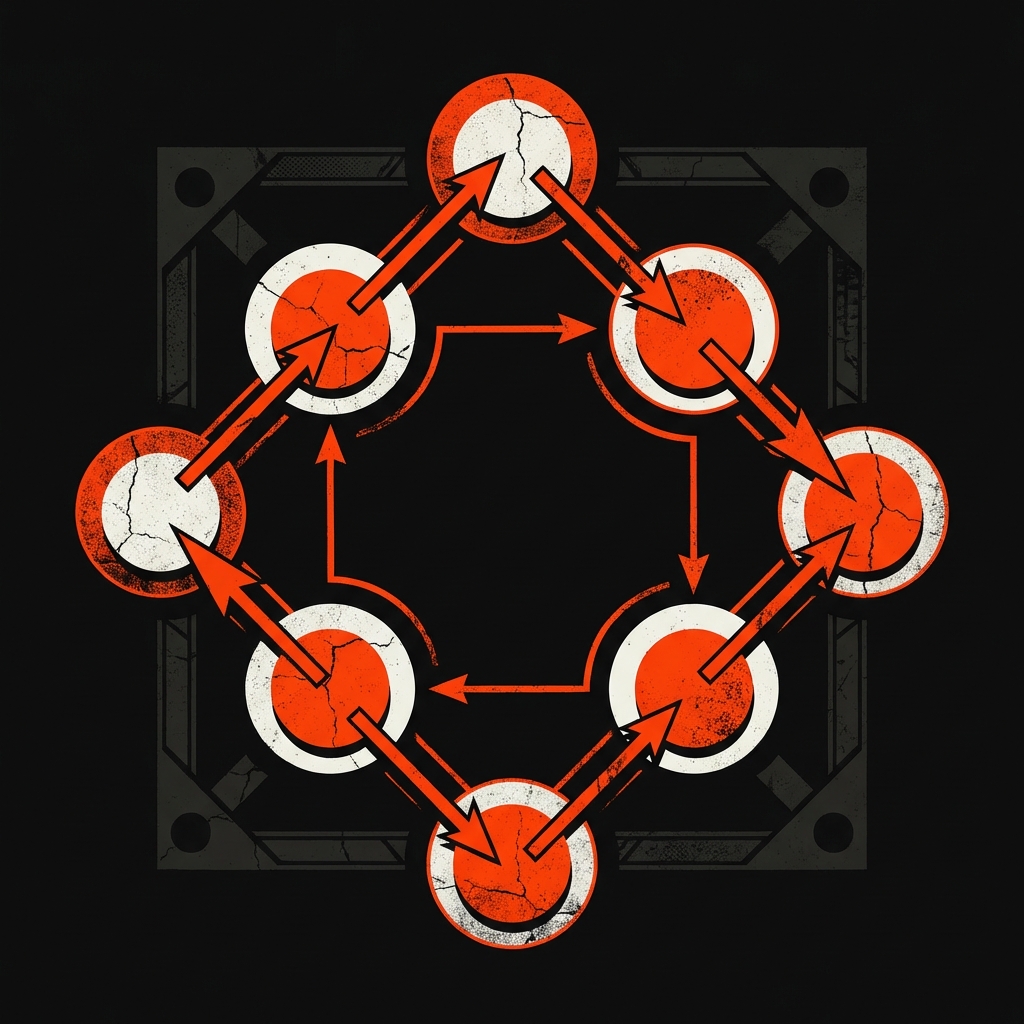
In practical terms, it is a connected ecosystem consisting of:
- • Inputs: brand positioning, product truth, ideal customer profile detail, constraints, and compliance rules.
- • Data: CRM records, analytics, search data, sales calls, and customer support tickets.
- • Workflows: research, planning, production, quality assurance, publishing, and distribution.
- • Controls: human review gates, brand voice enforcement, and performance thresholds.
- • Outputs: content, lifecycle messaging, reporting, insights, and iteration plans.
At the core of this engine is the 10x Marketer model. This framework operates on a critical philosophy: augmentation, not replacement. The most successful implementations of AI marketing automation do not attempt to automate the human element out of existence. Instead, they leverage technology to amplify human capability.
In this model, humans serve as the strategic architects. Marketing Directors provide the brand voice, the nuanced understanding of customer psychology, and the high-level strategic direction. The AI serves as the exoskeleton. It provides the speed, the scale, and the flawless execution required to dominate modern digital channels. It handles the heavy lifting of data parsing, draft generation, and formatting, freeing the human mind to focus entirely on strategy and relationship building.
Consider the challenge of scaling organic search traffic. A traditional team must hire multiple writers, editors, and SEO specialists to increase output. By contrast, a modern organization scales by building a bespoke content engine tailored to your specific brand architecture. This engine ingests your historical data, learns your exact tone of voice, and autonomously generates high-fidelity drafts that require only minor human approval before publication. The result is exponential scale without a corresponding increase in payroll overhead.
From Copilots to Autonomous Agents: The Rise of Agentic AI
The technological leap from 2024 to 2026 is defined by the transition from passive tools to proactive systems. We are moving rapidly away from copilots to the era of Agentic AI.
A copilot is inherently reactive. It waits patiently for a human operator to input a command, provide context, and request a specific output. While useful, this still requires a human to drive the process. Agentic AI represents a fundamental paradigm shift. These are systems capable of autonomous planning, execution, and iteration. You do not give an agent a prompt: you give it an objective.
For example, instead of asking a tool to write an email, you instruct an agent to increase webinar registrations by 15 percent. The agentic system will independently analyze past campaign data, identify the most responsive audience segments, draft the copy, schedule the deployment, and run multivariate tests on the subject lines without requiring human intervention at every step.
This level of autonomy is made possible by the Model Context Protocol (MCP). MCP is the critical infrastructure that allows these agents to break out of their isolated silos. Historically, large language models suffered from a lack of specific business context. MCP solves this by connecting the AI Marketing Engine directly to your internal systems. It allows the agent to read your live CRM data, check inventory levels, and reference historical sales calls.
Because of this secure data integration, the competitive advantage now lies in deploying autonomous AI agents that act as a marketing department in a box. These agents execute complex, multi-step workflows with absolute precision. Furthermore, extensive research shows how effectively these systems can transform business processes and efficiency at an enterprise scale, drastically reducing the time from ideation to market deployment.
The 2026 Search Landscape: The Shift to GEO (Generative Engine Optimization)
One of the most profound impacts of the AI Marketing Engine is its effect on customer discovery. For over two decades, digital marketing has been anchored by traditional search engine optimization. Marketers optimized for keyword density, backlink profiles, and technical site structure to rank on a static results page. That era is concluding.
The search landscape is undergoing a radical transformation as industry forecasts predict that traditional search engine volume will drop 25 percent by 2026 due to AI Overviews and chatbots. Users are no longer scrolling through ten blue links. They are asking complex questions to conversational interfaces and receiving synthesized, direct answers.
To survive this shift, organizations must pivot from traditional SEO to Generative Engine Optimization (GEO).
GEO requires a completely different architectural approach to content. Large language models do not care about how many times you repeat a keyword. They care about entity authority, semantic density, and factual consensus. Traditional SEO asked how to rank for a keyword. GEO asks how to become the trusted source the model references when answering a user problem.
To optimize for a generative engine, your AI Marketing Engine must structure your digital assets so that an algorithm recognizes your brand as the definitive primary source of truth for a specific topic. This involves producing highly structured data, utilizing natural language processing formats, and ensuring your content directly answers complex user intents. An effective AI Marketing Engine automatically formats your insights to be easily digested and cited by external AI platforms, ensuring your brand remains visible when consumers bypass traditional search engines entirely.
Content Engineering: Moving from "What to Write" to "What System to Build"
The evolution toward precision requires a fundamental shift in how marketing leaders view content creation. We must move away from the tactical mindset of asking what we should post this week and adopt the architectural mindset of asking what system we must build. This is the discipline of content engineering.
Content engineering treats marketing assets as outputs of a highly calibrated manufacturing process. A true professional does not open a chat interface and ask for a blog post. Instead, they engineer a continuous pipeline.
A fully realized AI Marketing Engine executes content engineering through a series of automated, interconnected steps. First, the intelligence layer scrapes search data and competitor websites to identify semantic gaps. Next, it cross-references this external data with your internal CRM to pinpoint the exact pain points of your current customer base. The engine then generates a comprehensive outline, applies a custom fine-tuned model trained exclusively on your brand's historical winning copy, and drafts the asset. Finally, it formats the piece for your specific Content Management System and stages it for human review.
Building this level of done-for-you infrastructure is rarely successful when attempted in-house by non-technical teams. It requires navigating complex API integrations, managing token limits, and ensuring strict data privacy protocols. This is why partnering with expert marketers who possess deep technical engineering capabilities is critical. The goal is to offload the friction of technology so your team can focus purely on the psychology of your buyers.
How to Architect Your Own AI Marketing Engine
Transitioning from manual marketing to a precision-engineered automated system requires a methodical approach. Founders and Marketing Directors must treat this as a core business integration rather than a software trial. Here is the operational roadmap for building your bespoke ecosystem.
Step 1: Audit Your Marketing Complexity
Before writing a single line of code or connecting an API, you must map your existing operational bottlenecks. An AI Marketing Engine is only as effective as the processes it optimizes. Identify the manual tasks that consume the highest percentage of your team's weekly hours.
Typically, these bottlenecks are found in SEO research, email sequence drafting, CRM data entry, and paid media reporting. Calculate the financial cost of this manual labor. You are looking for high-volume, repetitive tasks that require data processing but minimal emotional intelligence. By mapping these workflows, you create the blueprint for your autonomous agents, ensuring you build solutions that deliver immediate operational leverage.
Step 2: Integrate the Intelligence Layer
An engine cannot run without fuel, and the fuel for AI marketing automation is your proprietary data. Generic outputs are the exact result of generic inputs. To achieve 2026-level precision, you must integrate the intelligence layer using the Model Context Protocol (MCP).
This step involves securely connecting your chosen large language models directly to your business infrastructure. Your engine must be granted read-access to your CRM, your past performance dashboards, your brand guidelines, and your customer support logs. By grounding the system in your specific corporate reality, you eliminate hallucinations and ensure every piece of generated content or strategic recommendation is perfectly aligned with your historical business context.
Step 3: Deploy and Monitor
The final architectural step is deployment through the human-in-the-loop philosophy. You do not turn the engine on and walk away. You deploy the system to handle the execution, but you maintain strict human oversight at the strategic checkpoints.
In this phase, your marketing team transitions from creators to editors and curators. They review the automated drafts, approve the agentic workflows, and monitor the conversion data. Because the AI Marketing Engine operates with unified billing and a centralized dashboard, your Directors can easily track token usage, output volume, and overall return on investment. This monitoring phase allows you to continuously refine your custom models, ensuring the engine grows smarter and more aligned with your specific brand voice over time.
Precision is a design choice. The organizations that thrive in 2026 will be those that treat artificial intelligence not as a shortcut, but as highly structured, governed infrastructure. By building a unified engine, you scale your marketing output without scaling your headcount, securing a durable advantage in an increasingly automated landscape.
Frequently Asked Questions (FAQs) About AI Marketing Engines
What is an AI marketing engine? An AI marketing engine is a bespoke, interconnected ecosystem of tools, APIs, and automated workflows. Unlike a single software subscription, it acts as a centralized operational system that automates content creation, data analysis, and campaign execution based on your specific business logic and proprietary data.
How does GEO (Generative Engine Optimization) differ from traditional SEO? Traditional SEO focuses on keyword density and backlinks to rank on static search engine results pages. GEO optimizes content to be cited by AI chatbots and overviews. It requires structuring data for entity authority, semantic density, and factual consensus so language models recognize your brand as the primary source.
What is Agentic AI in digital marketing? Agentic AI refers to autonomous systems that can plan, execute, and iterate on multi-step objectives without constant human prompting. Instead of waiting for a command like a copilot, an agent can independently analyze data, draft campaigns, and optimize performance based on a high-level goal.
How do AI agents connect to my CRM? AI agents connect to internal business systems using frameworks like the Model Context Protocol (MCP) and secure API integrations. This allows the agents to securely read live data from your CRM, ensuring their actions and content generation are highly contextualized to your actual customer base.
Will AI replace my marketing team? No. The most successful framework is the 10x Marketer model, where AI acts as an exoskeleton, not a replacement. AI handles the heavy lifting of data processing and scale, while human marketers serve as the architects who provide strategic nuance, brand voice, and emotional intelligence.
Want to build marketing systems like this?
Book a Discovery CallMore Insights
The Ultimate Guide to Retargeting AI Ad Creative That Converts
Discover how retargeting AI ad creative scales personalization, combats fatigue, and drives incremental lift with predictive audience segmentation and server-side tracking.
Read more →
How to Measure the ROI of AI Marketing Automation: Metrics, Frameworks, and Dashboards
Learn how to measure the ROI AI marketing automation provides. Discover the frameworks, metrics, and dashboards needed to scale revenue and save time.
Read more →
How to Reduce Your Cost Per Acquisition by 40% with AI-Powered Ad Creative
Discover how to reduce CPA with AI ad creative strategies. Shift to creative-led growth, accelerate platform learning, and cut acquisition costs by up to 40%.
Read more →