Why Your Google Ads Quality Score Is Low (And the Fix)
Founder of AfM and operator of AI marketing systems across content, lead generation, paid media, and custom AI workflows.
Reviewed 22 May 2026
Reviewed by Jakub Cambor for practical accuracy, source fit, and usefulness.
Published 17 February 2026
AfM field note
Search, brand voice, publishing systems, and topical authority.
On This Page
The short answer
Why Your Google Ads Quality Score Is Low (And the Fix) is not mainly a tool question. It is an operating system question: what inputs are reliable, which decisions are human-owned, what should an AI agent do, and what evidence proves the system is working.
For most businesses, the useful path is to start with one revenue motion, instrument it end to end, then automate the repeatable work around it. The goal is not more AI output. The goal is a cleaner content and SEO system that creates visible commercial movement without adding permanent headcount.
At AI for Marketing, we judge why your google ads quality score is low (and the fix) by a simple standard: does it help the business make better decisions, publish or launch faster, reduce waste, and create measurable pipeline or revenue? If it does not, it is decoration.
Why this matters now
The old marketing stack was built for people operating software manually. A person researched, another person wrote, another person built the campaign, another person checked performance, and the learning often died in a spreadsheet or meeting note.
AI changes that only when the work is redesigned as a system. A good system keeps strategic judgement with humans, gives repetitive production to agents, and makes every output auditable. A weak system simply produces more tasks faster, which usually means more noise, more brand drift, and more reporting theatre.
In content and SEO, the constraint is usually that content calendars collapse when research, brand voice, search intent, editing, and distribution are not designed as one workflow. Fixing that constraint matters more than adding another dashboard or prompt library.
The operating model
A strong content and SEO system has five layers:
- • A clear commercial goal, such as booked calls, qualified pipeline, lower acquisition cost, faster content velocity, or higher conversion quality.
- • A source of truth for the audience, offer, brand voice, proof, exclusions, and approval rules.
- • AI agents or automations that handle the repeatable work, with narrow jobs and clear inputs.
- • Human review at the decisions that carry brand, budget, legal, or customer-trust risk.
- • A reporting loop that shows what happened, what changed, and what the next improvement should be.
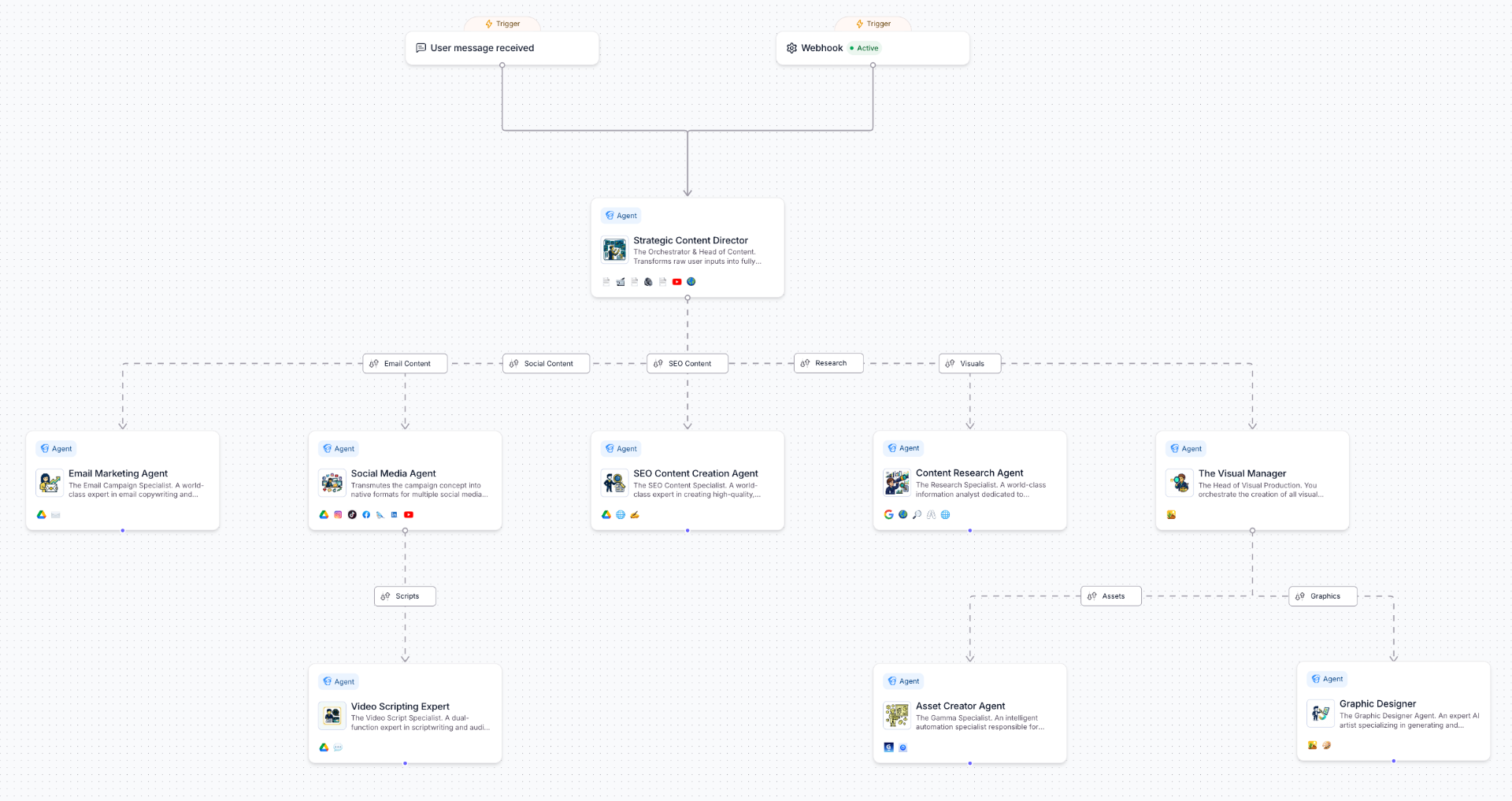
For why your google ads quality score is low (and the fix), that usually means building a content engine with topic research, brand DNA, briefs, drafts, editorial review, internal linking, and repurposing. The exact tools can change. The architecture should not depend on a single vendor staying fashionable.
Where teams get it wrong
Most failed AI marketing projects start with tool selection. The team buys a content tool, workflow tool, sales tool, or ad tool, then tries to force a business process around it. That creates automation that looks impressive in a demo but breaks under real operating conditions.
The more durable route is to map the process first. What information enters the system? Which steps are judgement calls? Which steps are repetitive? Where does quality need to be checked? Who owns the final decision? What would make the system unsafe, off-brand, or commercially misleading?
Once those questions are answered, AI becomes useful. Before that, it simply accelerates unclear work.
Metrics to track
Do not judge why your google ads quality score is low (and the fix) by activity volume alone. More articles, more ads, more sequences, or more reports only matter if they improve the business outcome.
Track qualified organic traffic, assisted conversions, content velocity, ranking movement, and sales usefulness. Add a small number of operational metrics too: cycle time, approval time, error rate, rework rate, and percentage of outputs that reach the quality bar on first review.
A practical dashboard should answer four questions in under a minute: what shipped, what worked, what failed, and what will change next week. If the dashboard cannot do that, it is reporting clutter.
A sensible implementation sequence
Start with a diagnostic. Inventory the current workflow, data sources, content assets, offers, campaigns, and reporting. Then choose the one bottleneck that is expensive, repetitive, and measurable.
Build the smallest system that can improve that bottleneck. Give it a clear job. Connect it to the right data. Add human approval. Run it for two to four weeks. Compare before and after. Only then expand into adjacent workflows.
This is slower than buying a tool and announcing an AI transformation. It is also the reason the system survives contact with real customers, real budgets, and real brand standards.
What good looks like
A good content and SEO system feels quiet. It does not require constant heroics from the founder or marketing team. It creates a steady rhythm of research, production, launch, review, and improvement. People still make the important calls, but the machine keeps the work moving between those calls.
The best sign is not that the AI sounds clever. The best sign is that the team knows exactly what is happening, can trace every output back to the source, and can see the commercial result of each improvement.
Practical checklist
- • Define the commercial outcome before choosing tools.
- • Document audience, offer, proof, tone, compliance, and approval rules.
- • Build one workflow before connecting the whole department.
- • Keep human approval where trust, spend, or legal risk exists.
- • Measure outcomes, not just production volume.
- • Review the system weekly and improve the weakest link.
FAQ
Should why your google ads quality score is low (and the fix) be fully automated?
Usually not. The repeatable research, drafting, enrichment, routing, and reporting can often be automated. The strategic decisions, final approval, positioning, budget calls, and customer-trust decisions should stay human-owned.
What is the biggest risk?
The biggest risk is publishing generic AI copy that sounds plausible but adds no original judgement. This is why we build systems with source truth, review gates, and performance evidence instead of relying on a single prompt or tool.
How long does implementation take?
A focused diagnostic can usually identify the build path quickly. A useful first workflow often takes days or weeks rather than months, but durable improvement comes from the weekly optimisation loop after launch.
Where should a business start?
Start where the pain is measurable. If the cost of the bottleneck is visible in lost time, wasted spend, slow publishing, poor lead quality, or unclear reporting, it is a good candidate for an AI marketing system.
Want to build marketing systems like this?
Book a Discovery CallRelated Articles
AI Content Creation: Scale Without Losing Quality
The content engine model for scaling publishing while preserving brand voice, search intent, editorial judgement, and proof.
Read more →Scale Content Production with AI: Zero Headcount
Scale Content Production with AI: Zero Headcount explained through a practical content and SEO operating model: what to build, what to measure, where AI helps, and where human judgement still matters.
Read more →AI Blog Writing: From Brief to Published Post
AI Blog Writing: From Brief to Published Post explained through a practical content and SEO operating model: what to build, what to measure, where AI helps, and where human judgement still matters.
Read more →